
Equipping Resources for
New Year

Please see options below on how to
receive one, two, three, four, or all ten resources
for your partnering gift
and product descriptions!
(Please note when selecting choices, please make your first choice the item most near the top of the list and so on for other choices. For instance, if you want options 2, 4, and 6 select them in that order as choice 1 is option 2, choice 2 is option 4, choice 3 is option 6. If you attempt to put option 6 as the first choice it may not let you get the combinations you want. We’ve attempted to provide the most popular combinations that could be selected. If there a specific combination you want that isn’t listed. You can make a corresponding donation by clicking here and going to “Donate, Make a Donation, My Equipping Gift tab” and then email us at store@equip.org your selections and we will verify the donation and process the resources chosen.)
Orders must be received by December 3rd to ensure non-expedited delivery. For arrival on orders after this date, please select the appropriate UPS shipping. All orders subject to product availability. Orders made after December 18th are not guaranteed arrival by December 24th.

The Progressive Miseducation of America:
Confronting the Cultural Revolution
from the Classroom to Your Community
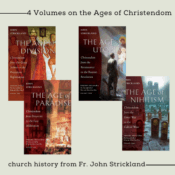
The Age of Paradise; The Age of Division;
The Age of Utopia; The Age of Nihilism

The Rise and Triumph of the Modern Self:
Cultural Amnesia, Expressive Individualism,
and the Road to Sexual Revolution
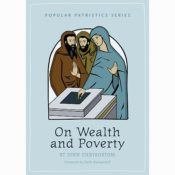
On Wealth and Poverty by St. John Chrysostom.
Foreword by Hank Hanegraaff
Choice of 2
Choice of 3
Choice of 4
Choice of all 10

The Privileged Planet (20th Anniversary Edition-2024):
How Our Place in the Cosmos Is Designed for Discovery
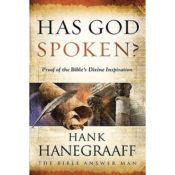
Has God Spoken?
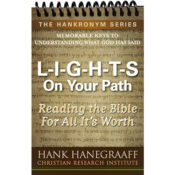
L-I-G-H-T-S on Your Path
Resource Descriptions:
The Progressive Miseducation of America: Confronting the Cultural Revolution from the Classroom to Your Community
by Corey Miller
Our culture is undergoing radical change. We see evidence of this cultural revolution all around us as values, norms, language, and laws all shift beneath our feet. But this revolution didn’t come out of nowhere—and it isn’t too late to stop it.
The Progressive Miseducation of America is an eye-opening look at how our universities have polluted the cultural landscape we live in today—and how Christians can take strategic actions in response. As a dedicated student of culture and revolutionary history, Corey Miller brings clear insights and actionable ideas to help you
- understand and defend against ideas subversive to the Christian faith
- further the Christian life and worldview through intentional methods of being salt and light
- inspire change not only within your family and church, but in the broader culture
Sobering yet optimistic, this bold and inspiring resource will equip you to take concrete steps in making the largest and most sustainable difference in both your community and the world!
The Age of Paradise; The Age of Division; The Age of Utopia; The Age of Nihilism (4 Volumes on Ages of Christendom)
by John Strickland
The first volume, The Age of Paradise: Christendom from Pentecost to the First Millennium (2019), tells the history of the West when it was still joined closely to the East—that is, to the culture of the early Church and Byzantium. At the heart of this story is the early Church’s “culture of paradise,” an experience of the world in which the kingdom of heaven was tangible and familiar. Drawing not only on worship and theology but statecraft and the arts, The Age of Paradise reveals the remarkably affirmative character Western culture once had under the influence of Christianity.
The second book, The Age of Division: Christendom from the Great Schism to the Protestant Reformation (2020), continues the story beyond the fateful separation of West from East—the Great Schism of 1054—and follows efforts by the papacy to impose a thorough-going reform of Western Christendom. In addition to improving the spiritual quality of church life, the Papal Reformation also unleashed other forces including the crusades and, more indirectly but tragically, a penitential piety that slowly eroded the place of paradise within Western culture. The sixteenth-century Protestant Reformation continued the process of transformation begun by the papacy in the eleventh century and, in very significant ways, brought it to an end.
The third book, The Age of Utopia: Christendom from the Renaissance to the Russian Revolution (2021), leads the reader through six of the West’s most creative centuries, passing beneath ceilings painted by Michelangelo into libraries frequented by Karl Marx. It explains how, between the Italian Renaissance and the Russian Revolution, secular humanism displaced traditional Christianity to become the source of modern culture. The result was some of the most illustrious music, science, philosophy, and literature ever produced. But the cultural “reorientation” from paradise to utopia—from an experience of the kingdom of heaven to one bound exclusively by this world—all but eradicated the traditional culture of the West, leaving it at the beginning of the twentieth century without roots in anything transcendent.
The final volume, The Age of Nihilism: Christendom from the Great War to the Culture Wars (2022), shows how the “specter of nihilism” appeared in the West at the end of the nineteenth century, the very moment secularism seemed triumphant. A self-styled “antichrist” named Friedrich Nietzsche and an obstinately Christian Fyodor Dostoevsky both offered ominous visions of what the West would become if “God is dead” and any moral act thus becomes permissible. Though total warfare seemed to confirm such predictions, a project arose in its wake to rebuild utopia with secular ideologies that, in the case of Nazism, opened the abyss even further. Communism and liberalism were left after the Second World War to compete for ultimate preeminence, but both would ultimately fail to replace the lost transcendence of the West’s deep first-millennium past. As the twenty-first century opened, utopia was as elusive as ever, and a culture of paradise once again beckoned to a civilization exhausted by centuries of secularism.
The history of Christendom is a long story, and it requires four distinct volumes to tell it. Each book stands alone and can be read without the others, though the effect of reading them in sequence will be greater.
The Rise and Triumph of the Modern Self: Cultural Amnesia, Expressive Individualism, and the Road to Sexual Revolution
by Carl R. Trueman
The sexual revolution is one manifestation of the larger revolution of the self
“The origins of this book lie in my curiosity about how and why a particular statement has come to be regarded as coherent and meaningful: ‘I am a woman trapped in a man’s body.’….The sexual revolution is as much a symptom as it is a cause of the culture that now surrounds us….The sexual revolution is simply one manifestation of the larger revolution of the self that has taken place in the West. And it is only as we come to understand that wider context that we can truly understand the dynamics of the sexual politics that now dominate our culture.”
“Freud provided a compelling rationale for putting sex and sexual expression at the center of human existence and all its related cultural and political components in a way that now grips the social imaginary of the Western world….Thinking of human beings as fundamentally defined by their sexual desire is now virtually intuitive for us all.”
“Sexual iconoclasm…has been baked into Western culture over the last 300 years. The modern West is simply bearing the bitter fruits of a rotten tree.”
Freedom of speech becomes the problem, not the solution
“While earlier generations might have seen damage to body or property as the most serious categories of crime, a highly psychologized era will accord increasing importance to words as means of oppression….Once harm and oppression are regarded as being primarily psychological categories, freedom of speech then becomes part of the problem, not the solution, because words become potential weapons.”
Ethics becomes a function of feeling
In our highly psychologized modern society, “the only moral criterion that can be applied to behavior is whether it conduces to the feeling of well-being in the individuals concerned. Ethics, therefore, becomes a function of feeling.”
On Wealth and Poverty by St. John Chrysostom. Foreword by Hank Hanegraaff
“In this literary pearl, St. John Chrysostom takes Christ’s famed parable of the rich man and Lazarus and attempts to plumb its immeasurable riches—knowing all the while that ‘no one will be able to empty all its wealth. Such is the nature of this abundance: the deeper you dig, the more divine thoughts will gush forth, for it is a never-failing spring.’” —Hank Hanegraaff, from the Foreword
The Privileged Planet (20th Anniversary Edition-2024): How Our Place in the Cosmos Is Designed for Discovery
by Guillermo Gonzalez and Jay W. Richards
Drs. Gonzalez and Richards cite and explain a plethora of remarkable examples that our Earth is a singularly privileged planet designed for discovery. Earth is situated between two arms of a flattened spiral galaxy — the Milky Way — not too close to the core to be exposed to lethal radiation, comet collisions, or light pollution that would obscure observation of the distant universe; and not so far that a privileged planet could never form or where we would not observe different kinds of nearby stars. Fully revised and updated with even more convincing evidence of an Intelligent Designer!
Has God Spoken? Proof of the Bible’s Divine Inspiration
by Hank Hanegraaff
Are Christians guilty of blind faith, or is the Bible really God’s inspired Word? Hank Hanegraaff offers a stirring defense of the Bible as the Word of God and your only reliable foundation for life. In answering the riveting question, “Has God spoken?” Hanegraaff uses manuscript evidence, archaeology, predictive prophecy, and much more to memorably demonstrate that the Bible is divine rather than merely human in origin. Hanegraaff demolishes modern objections to Scripture, such as “There are more mistakes in manuscript copies of the Bible than there are words in the New Testament.” “The biblical account of King David is no more factual than tales of King Arthur.” “Contemporary prophets are always wrong, and biblical prophets are just as unreliable.”
L-I-G-H-T-S on Your Path flipchart
by Hank Hanegraaff
Master the principles of biblical interpretation in minutes—remember them for a lifetime. Biblical interpretation is a science in that certain rules apply. It is an art in that the more you apply these rules, the better you get at it. In this convenient and concise laminated flipchart, you’ll learn to apply the Literal Principle, Illumination Principle, Grammatical Principle, Historical Principle, Typology Principle, and Scriptural Synergy.