Literary Apologetics
This article was published exclusively online in the Christian Research Journal, Volume 49, number 03 (2026).
When you support the Journal, you join the team and help provide the resources at equip.org that minister to people worldwide. These resources include our ever-growing database of more than 2,500 articles and Bible Answers, as well as our free Postmodern Realities podcast.
Another way you can support our online articles is by leaving us a tip. A tip is just a small amount, like $3, $5, or $10, which is the cost of a latte, lunch out, or coffee drink. To leave a tip, click here.
SYNOPSIS
This article examines the supernatural elements of Homer’s Odyssey under the two primary headings of “gods” and “monsters.” Using scriptural analogs as a framework, I suggest ways in which both of these can be understood as representations of a serious attempt to understand material and spiritual realities of the world even where Homer’s understanding falls short.
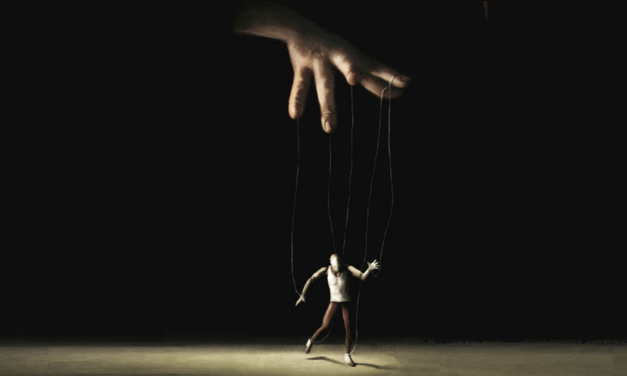
The gods of the Homeric pantheon can be understood as spiritual abstractions given concrete form, producing a worldview that muddles the spiritual and the material. Homer severely anthropomorphizes his gods, who engage in such human vices as adultery, deception, and petty conflict. Yet these same gods are understood as transcendent beings who providentially govern and guide the world and the course of human events. Indeed, in a sense the whole poem is an extended illustration of divine providence, as the gods direct Odysseus through a series of hardships that ultimately work out for his good. In spite of the chaos of Homeric polytheism, the Odyssey thus suggests, however imperfectly, a personal divine providence guaranteeing that all things work together for at least some kind of good.
The poem’s monsters move in the other direction: they are concrete beings endowed with otherworldly characteristics that bring them closer to abstract concepts such as chaos and fear of the unknown. Some may have originated in actual creatures, foreign peoples, places, or natural phenomena that were transmuted into monsters through retelling. Yet as the monsters cease to resemble particular hazards, they increasingly stand for the hazards of the world generally, including moral and spiritual dangers. The Cyclopes embody fears of uncivilized foreign peoples; Scylla and Charybdis transform natural hazards into terrifying adversaries; and Calypso and the Sirens confront Odysseus with enduring moral dilemmas involving duty, desire, pleasure, and self-preservation. Like the biblical Leviathan, Homer’s monsters can become powerful representations of the physical and spiritual perils of a world marked by terror, uncertainty, and human powerlessness.
The Odyssey therefore reflects both the power and the danger of myth: its monsters illuminate realities within nature, while its gods distort the divine reality beyond nature even as they bear witness to it.
For us in the twenty-first century, it is easy to put the Iliad and the Odyssey in a vaguely defined mass of “classics” among a thousand other books that we might have been assigned in high school or that we have a vague sense we “ought” to read some day. But any survey of the history of Western art, literature, and culture will quickly show that the two epic poems traditionally ascribed to the cryptic “Homer” have left their fingerprints in an extraordinary number of places, from the bedchamber of Alexander the Great (who supposedly liked to keep a copy of the Iliad under his pillow) to movie theaters in 2026 (where Christopher Nolan’s film The Odyssey has proven to be a grand success).1
You would pretty well have to be living under a particularly hefty rock not to realize that the Odyssey especially — the shorter and more adventure-filled of the two Homeric epics — has extended its influence deeply into the modern age. “Ulysses” (the Latin name of the poem’s hero, Odysseus in Greek) is the title of a well-known poem by Lord Tennyson (1842) and of an era-defining novel by James Joyce (1922). Psychedelic rock band Cream released a song titled “Tales of Brave Ulysses” in 1967. In the realm of cinema, the Coen Brothers’ film O Brother, Where Art Thou? had, in 2000, declared itself to be “Based upon ‘The Odyssey’ by Homer” in its opening titles. Indeed, less than two years before the latest cinematic Odyssey, a much smaller-budget film starring Ralph Fiennes and titled The Return dramatized the story of Odysseus’s homecoming as given in the second half of Homer’s poem (expunged of all supernatural elements). In 2017, a new translation of the Odyssey by University of Pennsylvania classicist Emily Wilson raised a degree of popular brouhaha — variously positive and negative — that one rarely sees for anything related to classical studies.2 In short, 2,700 years after any historical Homer might have lived, and 3,200 years after any historical Trojan War might have taken place, the question for anyone looking to engage seriously with what we call Western culture is not whether to deal with the Odyssey, but how to deal with it.
A WORLD OF GODS, HEROES, AND MONSTERS
The very nature of the poem has, however, made that question a serious problem for a very long time — and not just for Christians. The Greek Pre-Socratic philosopher Xenophanes, in developing a monotheistic system of thought, began by denouncing Homer’s depiction of the gods as simply immoral. Plato’s Republic likewise contains a lengthy discussion of Homer, in which one of the main concerns is that his poems are full of dangerous untruths and bad ethics.3 Among early Christian thinkers, Augustine was one of the least dismissive of pagan literature, and even he merely commends Homer as “skillful in weaving…stories” [peritus texere…fabellas] but, in the end, “most sweetly empty” [dulcissime vanus].4
Certainly, the Odyssey is in some ways a troublesomely primitive text. Its origins are severely obscure because they are, strictly speaking, prehistoric (older than the earliest historical writing). What we have now with the Iliad and the Odyssey is a pair of long written poems with a clear authorial attribution (Ὅμηρος [Homeros], Anglicized as “Homer”), but this is not their original form. It is now, following the work of twentieth-century scholars, universally agreed that both epics originated in traditions of oral storytelling carried on by professional bards, called ἀοιδοί [aoidoi] in early Greek. Whether there ever was any one figure whom we can identify as Homer and credit with giving both the Iliad and the Odyssey their final form — what is called the Homeric Question — remains uncertain and is probably irrelevant. (At the risk of oversimplifying, think of it this way: if there was a singular “Homer,” he was telling the same stories in essentially the same form as all the other aoidoi; if there was not, then the various aoidoi were so uniform in their subject matter and language that they might as well all have been the same person.) To the extent that there was anyone identifiable as Homer, he would have been one such aoidos, active somewhere around the eighth century BC, and that is virtually all we can say.
No matter who gave us the Iliad and the Odyssey as we have them, the two poems form part of a complex of mythological tales related to the Trojan War — a possibly semi-historical invasion of Troy, a city on the coast of what is now Turkey, by an alliance of Greek city-states somewhere around 1200 BC. There is therefore already a long chronological gap between the events of the Homeric epics and their composition, which are pieces of legend and mythmaking rather than history. This is especially true of the Odyssey, which is particularly dense with fantastical elements. Here we find Odysseus, a man of virtually unlimited cunning and no scruples about using it to his advantage, driven far and wide by various gods and supernatural forces, facing down a sequence of monsters, outrageous foreign peoples, and wildly hostile environments as he attempts to return home after the Trojan War, now stranded on the island of the sea-goddess Calypso until more powerful gods intervene to help him finally go home, so that he can massacre the impudent band of Suitors who, supposing him to be dead, have been trying to pressure his wife Penelope into marrying one of them.
Of all the elements that threaten to reduce the Odyssey to a curious relic of a primitive worldview, probably the most obvious is the prominence of monsters and anthropomorphic pagan gods. There are numerous approaches that can be, and have been, taken in handling this problem, but most of them come down essentially to regarding gods and monsters as symbolic or allegorical — myth as a vehicle for “truth” or “meaning” distinct from material reality. Actually, C. S. Lewis is more helpful in reversing the terms of this distinction when he suggests that, in dealing with mythology, “we come nearest to experiencing as a concrete what can otherwise be understood only as an abstraction.”5 Thus, “When we translate [from myth to ‘meaning’] we get abstraction — or rather, dozens of abstractions. What flows into you from the myth is not truth but reality…and, therefore, every myth becomes the father of innumerable truths on the abstract level.”6 This is especially apropos for the Homeric epics, whose influence has been too varied and wide-ranging to make them look like simple allegories. The gods and monsters of the Odyssey can, moreover, best be understood as representing two different, complementary ways of relating the concrete to the abstract. Monsters, on the one side, are concrete beings endowed with otherworldly characteristics that bring them closer to abstract concepts such as chaos and fear of the unknown. The gods of the Homeric pantheon, meanwhile, are better understood — as, in fact, is often suggested in defining idolatry — as spiritual abstractions given concrete form. The result is a worldview that muddles the spiritual and the material, and in that sense, it is easy to see why Homer has been such a problem for many Christian readers. Yet a framework such as Lewis suggests promises to help us see what is good and true in Homer, even while it makes allowance for his limitations.
For both of these central issues — gods and monsters — it will be especially helpful in this context to draw on a very old tradition of comparing the Homeric epics with the Christian Scriptures, and to observe how the latter give some hints at how mythological imagery can be interpreted in light of supra-mythical reality.
REAL MONSTERS?
Compared with the Odyssey, the Bible is pretty light on monsters, but the exceptions are well known. Probably most significant is the recurring figure of Leviathan. There is no need here to weigh in on old controversies about what Leviathan is and whether it is real or mythic, since in any case, “The name Leviathan,” in John Calvin’s formulation, “denotes either a large serpent or whales and fish of the sea which in their huge size are like a monster” [Nomen LEVIATHAN…significat vel serpentem magnum, vel balneas et marinos pisces, qui ingenti magnitudine ad monstrum accedunt].7 In other words, even if it is a natural animal, it is treated like a monster of myth. The Eerdmans Dictionary of the Bible states plainly that, regardless of specifics, Leviathan is “A primeval sea serpent representing chaos.”8 Certainly for all five Old Testament passages that mention Leviathan, what it stands for matters a good deal more than what it is, and interpreters throughout history have almost invariably done exactly what Lewis says about translating into abstractions. Most often the emphasis is on God’s control over Leviathan as a force of nature, whether in having created it (Psalm 104:26: “There go the ships, and Leviathan, which you formed to play in it”)9 or in overpowering it (Psalm 74:14: “You crushed the heads of Leviathan; you gave him as food for the creatures of the wilderness”; Isaiah 27:1: “In that day the Lord with his hard and great and strong sword will punish Leviathan the fleeing serpent, Leviathan the twisting serpent, and he will slay the dragon that is in the sea”).10 The most famous Leviathan passage, Job 41, likewise shows God invoking the beast in order to contrast mankind’s powerlessness over nature with his own sovereignty, and it quickly becomes less a particular creature than an embodiment of the created order in general, especially its unknown and terrifying aspects.
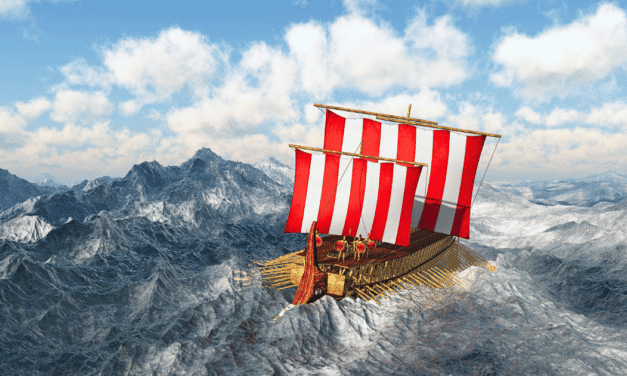
It is not incidental that both Leviathan and the monsters of the Odyssey are closely associated with the sea, which is itself commonly used (in Scripture, Homer, and elsewhere) as an archetypal symbol of chaos and human powerlessness against forces of nature. The Odyssey takes this a step further by associating its monsters, which appear almost exclusively in Odysseus’s account of his travels in Books 9–12, with distant and unexplored parts of the world and with the fears that accompany this unknownness. The man-eating Cyclopes, for instance, one of whom traps Odysseus in a cave and eats several of his men, are essentially an embodiment of fears about uncivilized foreign peoples. Homer is virtually explicit on this point in the famous passage in which Odysseus describes the Cyclopes’ society:
From there, grieving still at heart, we sailed on further
along, and reached the country of the lawless outrageous
Cyclopes who, putting all their trust in the immortal
gods, neither plow with their hands nor plant anything,
but all grows for them without seed planting, without cultivation….
These people have no institutions, no meetings for counsels;
rather they make their habitations in caverns hollowed
among the peaks of the high mountains, and each one is the law
for his own wives and children, and cares nothing about the others.
(9.105–109, 112–115)11
Despite their status as inhuman giants, the Cyclopes are thus described in terms that look remarkably like sixteenth-century explorers’ accounts of the peoples of the New World.12
We can thus begin to wonder whether, just as Leviathan may be a known animal described in mythic terms, the Cyclopes are ultimately an actual foreign nation, mythologized into monsters as the story was told and retold by Greek aoidoi with no firsthand knowledge of them. The process by which this can happen is well captured by the following dialogue from Umberto Eco’s novel The Name of the Rose:
“But is the unicorn a falsehood? It’s the sweetest of animals and a noble symbol. It stands for Christ and for chastity….”
“So it is said, Adso. But many tend to believe that it’s a fable, an invention of the pagans.”
“What a disappointment,” I said. “I would have liked to encounter one, crossing a wood. Otherwise what’s the pleasure of crossing a wood?”
“It’s not certain the animal doesn’t exist. Perhaps it’s different from the way it’s illustrated in these books. A Venetian traveler went to very distant lands…and he saw unicorns. But he found them rough and clumsy, very ugly and black. I believe he saw a real animal with one horn on its brow. It was probably the same animal the ancient masters first described faithfully….Then this description, passing from auctoritas [authoritative source] to auctoritas, was transformed through successive imaginative exercises, and unicorns became fanciful animals, white and gentle.”13
This can be applied in different ways to any of the Odyssey’s monsters. Consider Scylla and Charybdis. The latter is in fact not a monster at all, but a whirlpool, a perfectly real phenomenon. Scylla, a creature whose six heads reach out and snatch six sailors from any ship that passes by, certainly looks harder to explain as a real-world object, but already in ancient times the Roman writer Seneca could say as a trite observation, “I know very well that Scylla is a rock [on the coast of Sicily] and in fact one not fearful to sailors” [Scyllam saxum esse et quidem non terribile navigantibus optime scio].14
But why should barbarians and oddly shaped rocks (or whales) be transmuted into monsters? The answer is, at one level, simple: monsters are dramatic. Consider the description of Charybdis given by Homer’s Circe: “under this [fig tree] Charybdis sucks down the black water. / For three times a day she flows15 it up, and three times she sucks it / terribly down” (12.104–106). Still recognizable, as I have said, is the natural whirlpool, but it is at the same time presented like a creature with will and intelligence, spitting out and sucking in the water with its mouth. The advantage of putting things this way should be obvious, being essentially the same reason poetry about the natural world uses metaphor. Certainly, it would be exciting enough for Odysseus and his ship to risk being sucked down into the sea — but it is more exciting still to imagine this as the ship facing down an undefeatable monstrous opponent.
Moreover, the more the Odyssey’s monsters cease to resemble particular hazards (e.g., a specific rock formation in Sicily), the more they stand in for the hazards of the world generally. They can become so general, in fact, that they cease to represent only material dangers, but moral and spiritual dangers as well (just as biblical commentators have often associated Leviathan with the devil). Consider the goddess Calypso, whose captivity of Odysseus could be thought of as simply a mythic image of shipwreck, or the Sirens, who could be seen as emerging from accounts of specific dangerous coastlines. But, with each of these, Odysseus is given a moral dilemma: in the case of Calypso, a choice between what is easy and pleasant (living endlessly with the goddess) and what is natural and proper (going home and eventually dying); in the case of the Sirens, the puzzle of how to rectify the demands of duty and self-preservation with those of a desire to hear their music. When expressed in schematic terms, both scenarios thus turn from primitive fantasies into something that virtually any of us will not only understand but see parallels within our own lives. As J. R. R. Tolkien says of another mythological epic, Beowulf, it is vital “to consider how and why the monsters become ‘adversaries of God,’ and so begin to symbolize (and ultimately to become identified with) the powers of evil, even while they remain…mortal denizens of the material world.”16 Tolkien is right to contrast Beowulf’s monsters with those of the Odyssey in that the latter are never “identified with the powers of evil” as such, but the curious coexistence of material realness with abstract moral or spiritual significance is a defining feature of how monsters function for Homer as well (hence, for instance, why “Scylla and Charybdis” became a proverbial way of expressing any kind of personal dilemma).
TRUTH IN FALSE GODS?
It would seem at first blush that the Christian Scriptures, which are unambiguous about the oneness of God and regularly condemn polytheism, give us absolutely no basis for seeking truth in the gods of Homeric myth. But a closer look at a few key passages shows that the New Testament, at least, is not averse to using elements of pagan belief as a bridge to Christian doctrine. We see this overtly in Paul’s sermon at the Areopagus in Acts 17. Most famously, he identifies the true God with the “unknown god” honored at an obscure altar, but his earlier quotation of the Greek poet Aratus (one of the “some of your own poets” at v. 28) implicitly takes a different tack. Aratus’s Phaenomena, source of the phrase “For we are indeed his offspring,” is the only one of the four or so pagan Greek texts quoted in the New Testament to have survived, and so we can realize, as modern scholars have pointed out, that in Aratus’s poem the “he” in question is the god Zeus.17 For Aratus, however, Zeus is scarcely recognizable as the “wide-browed” god of the Homeric epics, having become for Greek philosophers so much, in Spencer Klavan’s words, “a supreme mind at work in every crevice of the universe”18 that it was no stretch at all for Paul to identify him with the One God of the Jews.
Likewise, consider the well-known passage in the epistle to the Romans in which Paul asserts that God’s “invisible attributes, namely, his eternal power and divine nature, have been clearly perceived, ever since the creation of the world, in the things that have been made” (1:20). Anders Nygren is right to argue that this should not be used to “educe an entire ‘natural theology’ or ‘natural religion,’”19 and that Paul’s emphasis is on how “men in their iniquity suppress the truth”20 (have “exchanged the truth about God for a lie” [v. 25]) — but such suppression itself implicitly acknowledges some apprehension of the truth being suppressed. As Karl Barth puts it, “Even the unbeliever encounters God, but he does not penetrate through to the truth of God that is hidden from him, and so he is broken to pieces on God.”21 Thus, “We make of the eternal and ultimate presupposition of the Creator a ‘thing in itself’ above and in the midst of other things, of that which is living and abstracted from all concreteness a concrete thing — no doubt the highest — in the midst of other concrete things,”22 and different aspects of the world become different gods. Yet even this impulse to make an idol of some limited aspect of the human encounter with God is “broken by the witness it bears to the unknown Creator whose glory cannot be confused with the known glory of an image, however pure and delicate.”23
To understand how a lie can witness to the truth from which it was corrupted — how Homer’s Zeus can be reinterpreted as Aratus’s philosophical Zeus, whom Paul could relate directly to the God revealed finally in Christ — we should consider what the gods actually do in the Odyssey. And as soon as we do begin to consider this question, we find an odd tension. On the one hand, Xenophanes was right to observe that Homer has “ascribed to the gods all the deeds / which among men are matters of reproach and blame: / thieving, adultery, and deceiving one another.”24 On the other hand, these same objectionably anthropomorphic gods are understood as transcendent beings who providentially govern and guide the world and the course of human events.
This tension is apparent from the very beginning of the Odyssey, whose first scene presents us with an assembly of the gods on Mount Olympus. In line with Xenophanes’s complaints, this assembly is contingent on the fact that “Poseidon was gone…to visit the Aithiopians” (1.22), where “he sat at the feast and took his pleasure” (1.26), enabling the other gods to scheme behind his back — in other words, on gods practicing debauchery and deceptive court politics. But by the same token, Zeus’s opening speech to this assembly immediately draws attention away from this to the idea of divine transcendence, goodness, and providence:
Oh for shame, how the mortals put the blame upon us
gods, for they say evils come from us, but it is they, rather,
who by their own recklessness win sorrow beyond what is given,
as now lately, beyond what was given, Aigisthos married
the wife of Atreus’ son, and murdered him on his homecoming,
though he knew it was sheer destruction, for we ourselves had told him,
sending Hermes, the mighty watcher, Argeïphontes,
not to kill the man, nor court his lady for marriage.
(1.32–39)
There is certainly still some reflection of objectionably human-like qualities here, but Zeus’s words also presuppose a divine order oriented toward ultimate justice, in a manner that would not be radically out of place in Dante.
Homer’s belief in divine providence becomes particularly obvious in scenes where various gods visit particular characters to provide guidance. The tenor of these is well captured by the words of a “dream image” sent by Athena to Penelope in Book 4:
Take courage, let not your heart be too altogether frightened,
such an escort goes along with him [Odysseus], and one that other
men would have prayed to have standing beside them, for she has power,
Pallas Athene, and she has pity on you in your grieving,
and it is she who has sent me to you to tell you of these things.
(4.825–829)
Significant verbal similarities in various passages of Scripture should be so obvious that I will not waste space cataloging them. It remains true that Homer severely anthropomorphizes his gods, but the characters’ reactions to divine interventions frequently counteract this with a real sense of transcendence and awe. For instance, after one divine visitation Nestor declares to Telemachus, “Dear friend, I have no thought that you will turn out mean and cowardly / if, when you are so young, the gods go with you and guide you” (3.375–376). The prayer to Athena with which he follows this may be faulted for making a trivial request but nevertheless grants her not merely influence but sovereignty over human life: “So now, O queen, be gracious, and grant me good reputation / for myself and for my children also and for my grave wife” (380–381).
Indeed, in a sense the whole poem is an extended illustration of the idea of divine providence, as the gods direct Odysseus through a series of hardships which, however, ultimately work out for his good. As Zeus expresses it in the opening scene, again in terms that will call to mind certain passages of Scripture about God’s care for His people,
But come, let all of us who are here work out his homecoming
and see to it that he returns. Poseidon shall put away
his anger; for all alone and against the will of the other
immortal gods united he can accomplish nothing.
(1.76–79)
Likewise, a disguised Athena tells Odysseus, after she has helped him finally reach Ithaca, that she “is always / standing beside you and guarding you in every endeavor” (13.300–301). Yet the all-important difference remains, that for Homer there can be disunity among the gods.
Thus, on the one hand, it is the case that the gods come into conflict or passively disregard one another’s wishes. Athena is able to complain to Zeus, “the heart in me is torn for the sake of wise Odysseus, / unhappy man, who still, far from his friends, is suffering / griefs, on the sea-washed island” (1.48–50) but that “the heart in you is heedless of him” (60); and Zeus in turn is able to claim, “It is the Earth Encircler Poseidon who, ever relentless, nurses a grudge, / because of the Cyclops, whose eye he [Odysseus] blinded” (68–69). On the other hand, the will of “rogue” gods does consistently give way to what we can describe as a greater providence. This tension is partly resolved for Homer by the idea of an impersonal fate to which even the gods are subject — but it is also the case that Homer cannot shake the idea that the gods are ultimately in control, as he sometimes speaks of “the fate of the gods” (3.269, 22.413)25 or directly attributes the courses of mortals’ lives to Zeus or other deities.26 As Paul Tillich argues, “The mythological type of polytheism could not live without monotheistic restrictions,”27 and the recourse to impersonal fate is only one aspect of this. For mythological characters such as those of the Odyssey, “In the moment of prayer the god to whom a man prays is the ultimate, the lord of heaven and earth” (as in Nestor’s prayer to Athena quoted above), and this “expresses a feeling for the identity of the divine in spite of the multiplicity of gods and the differences between them.”28 Thus in the end, in spite of the chaos of Homeric polytheism, the Odyssey does suggest, however imperfectly, a personal divine providence guaranteeing that all things work together for at least some kind of good.
Samuel Taylor Coleridge reflects a common idea of Homer as a poet taught only by nature itself when he imagines him “list’ning to the tide,” where “By those deep sounds possessed with inward light / [He] Beheld the Iliad and the Odyssee [sic] / Rise to the swelling of the voiceful sea.”29 In some senses, this is truest precisely where he is farthest from the natural world as we experience it. His gods and his monsters may be even less real than his heroes and his battles, but they show a serious attempt to understand nature at its highest and deepest levels. The Odyssey’s monsters are more powerful representations of the physical and spiritual perils of the world than any literal account of their real-world inspirations because they strip away all concern for “scientific” grounding (and are therefore unfazed by improved scientific explanations) while preserving the terror and uncertainty that confront us in “nature red in tooth and claw.” Explain the physics of Charybdis all you want — she still sucks down every ship that gets too close. The limits and hazards of mythological thinking are more apparent where Homer goes the other way and tries to make that which is above and behind nature into something that fits into nature, which comes to human experience often in a chaos of contraries, reducing the unitary and incomprehensible God into a diverse set of conflicting quasi-humans. But the glimpses of a purer divinity that can be seen behind these corrupt, humanized divinities are at the same time an affirmation of how, in Augustine’s words, “both heaven and earth and all which is in them, behold, from all around they tell me to love you (God)” [et caelum et terra et omnia quae in eis sunt, ecce undique mihi dicunt ut te amem].30
Matthew B. Diem has a PhD in English (with a concentration in medieval literature) from the University of North Carolina at Chapel Hill and teaches Latin at Covenant Day School in Matthews, North Carolina. His work has appeared in Arthuriana and (pseudonymously) Arion.
NOTES
- For the Christian Research Journal’s review of the film, see Cole Burgett, “Odysseus and the Golden Rule: Deconstructionism and Christopher Nolan’s ‘The Odyssey,’” Christian Research Journal 49, number 03 (2026), https://www.equip.org/articles/odysseus-and-the-golden-rule-deconstructionism-and-christopher-nolans-the-odyssey/.
- See Homer, The Odyssey, trans. Emily Wilson (W. W. Norton, 2017). Much of this had to do with the way the translation was marketed, as the first English verse translation of the complete Odyssey by a woman, which was popularly mangled into “first translation of Homer by a woman.” Proponents and detractors were therefore both eager to look for “feminist” insights (as the proponents saw it) or distortions (as the detractors saw it), though most of this amounted to grasping at straws. Matters were not helped when, in a widely publicized move, Columbia University adopted Professor Wilson’s translation for its Core Curriculum in place of Richmond Lattimore’s (see note 11), seemingly on grounds related to its perceived “progressive” credentials, including use of the word “slave” to translate various Greek terms and supposedly more “sensitive” language in describing non-Greek peoples (including the Cyclopes). Again, most of this was overblown. More substantial praise and criticism of the translation centered on its poetic and linguistic qualities. Generally, the translation renders each line of Greek dactylic hexameter with one line of English iambic pentameter, a procedure that has been praised for its fluency and criticized as silently and misleadingly abridging the poem (given that a pentameter line is shorter than a hexameter line), with some reviewers further objecting to the irregularity of the English meter. The language of the translation also tends definitely and confessedly to modernization (e.g., Odysseus described at 1.1 as a “complicated man,” Telemachus at one point using the phrase “It’s not fair”), which again has been praised for readability but seen by others as a deflation of Homer’s language, and possibly meant to bake Wilson’s own attitudes to the characters into the poem itself. A concise overview of the issues in Wilson’s translation procedures can be found in Helaine L. Smith’s review of her Iliad (Arion 31, no. 3 [2024]). In view of all this, it strikes me as rather ironic that Wilson publicly savaged the recent Odyssey movie largely on “purist” grounds in a review for the London Review of Books, in which — besides some odd political and cultural criticisms about the filming locations and casting and a still odder gripe about lack of sex scenes — most of the faults she finds with the film center on its failure to reflect the values and worldview of the source material. See Emily Wilson, “An Uncomplicated Man,” London Review of Books 48, no. 14 (August 13, 2026), https://www.lrb.co.uk/the-paper/v48/n14/emily-wilson/an-uncomplicated-man.
- For Xenophanes, see below; for Plato, see Republic 2.377d‒3.392c.
- Augustine, Confessions 1.13.22. All translations from Latin sources are my own.
- C. S. Lewis, “Myth Became Fact,” in God in the Dock: Essays on Theology and Ethics, ed. Walter Hooper (Eerdmans, 1970), 66.
- Lewis, “Myth Became Fact,” 66.
- John Calvin, Commentary on Isaiah 27:1, emphasis added. I have cited Calvin’s note from the 1559 Geneva printing of Commentarii in Isaiam Prophetam, available on Google Books, but complete English texts of all Calvin’s biblical commentaries are available here: https://www.ccel.org/ccel/calvin/commentaries.i.html.
- Eerdmans Dictionary of the Bible, ed. David Noel Freedman (Eerdmans, 2000), 803.
- All quotations from the Bible are given in the English Standard Version.
- Leviathan also seems to be an emblem of cosmic forces at Job 3:8, where Job associates those “who are ready to rouse up Leviathan” with those “who curse the day,” usually taken to mean sorcerers and certainly denoting some kind of rebellion against the natural order of things.
- All quotations from the Odyssey are taken from The Odyssey of Homer, trans. Richmond Lattimore (Harper Perennial, 2007), unless noted otherwise. For English versions of both Homeric epics, I strenuously and exclusively recommend Lattimore’s translations, which are remarkable for their accuracy while reflecting many of the originals’ important poetic characteristics. (The chief criticism has always been that the result is not really English poetry, but for a reader whose goal is access to early Greek poetry this should hardly be a forbidding obstacle.) One of their notable advantages is that they retain the original poems’ line divisions as much as reasonably possible, and so the citations by book and line numbers given in this article will key to both Lattimore and the original Greek. It will be noted, however, that Lattimore and I follow different conventions for the spelling of some names.
- For a particularly apt example, cf. Michel de Montaigne’s famous essay “On Cannibals” (Essays, Bk. 1, ch. 30).
- Umberto Eco, The Name of the Rose, trans. William Weaver (Mariner Books, 2014), 337.
- Seneca the Younger, Moral Epistles 79.1.
- Sic, but likely an error for “throws,” which both produces more idiomatic English and more accurately renders original Greek ἀνίησιν [aniesin].
- J. R. R. Tolkien, “The Monsters and the Critics,” in An Anthology of Beowulf Criticism, ed. Lewis H. Nicholson (University of Notre Dame Press, 1966), 69.
- For a helpful overview of the Phaenomena and its use by Paul in Acts, see Spencer A. Klavan, “A Phenomenal Poet,” New Criterion 44, no. 8 (2026): 4–8.
- Klavan, “Phenomenal Poet,” 4.
- Anders Nygren, Commentary on Romans, trans. Carl Rasmussen (Fortress Press, 1978), 102.
- Nygren, Romans, 104.
- Karl Barth, The Epistle to the Romans, trans. Edwyn C. Hoskyns (Oxford, 1968), 43.
- Barth, Romans, 47.
- Barth, Romans, 50.
- Xenophanes, fr. B11 (DK 21 B11), in S. Marc Cohen et al., eds. Readings in Ancient Greek Philosophy: From Thales to Aristotle (Hackett, 2011), 26.
- In both instances, Lattimore translates μοῖρα [moira] as “doom,” but this is the basic Homeric word for fate. The gods are also spoken of as the ones directing μοῖρα at 19.592–593, though again Lattimore avoids using “fate” here.
- For example, at 15.488–490a, Odysseus tells Eumaeus, “But beside the sorrow Zeus has placed some good for you, seeing / that after much suffering you came into the house of a kindly / man.”
- Paul Tillich, Systematic Theology, vol. 1 (University of Chicago, 1951), 224.
- Tillich, Systematic Theology, 1:224.
- Samuel Taylor Coleridge, “Fancy in Nubibus,” in The Complete Poems, ed. William Keach (Penguin, 1997), 365.
- Augustine, Confessions 10.6.8.