Listen to this article (7:53 min)
Cultural Critique Column
This article was published exclusively online in the Christian Research Journal, Volume 48, number 04 (2025).
Note: This is also part of our ongoing Philosophers Series.
When you support the Journal, you join the team and help provide the resources at equip.org that minister to people worldwide. These resources include our ever-growing database of more than 2,500 articles and Bible Answers, as well as our free Postmodern Realities podcast.
Another way you can support our online articles is by leaving us a tip. A tip is just a small amount, like $3, $5, or $10, which is the cost of a latte, lunch out, or coffee drink. To leave a tip, click here
The well-known are often known for what they never did or never said. Apocryphal stories often attach to various heroes and heroines of history. Did George Washington really confess to chopping down the cherry tree when he was a child? Did Jimi Hendrix really say that Phil Keaggy was the best guitar player alive? In these cases, the truth of the matter does not affect the fundamental identity of George Washington or Phil Keaggy (a guitar virtuoso). However, some great souls have their reputation tarnished by misconceptions about their lives or their thoughts.
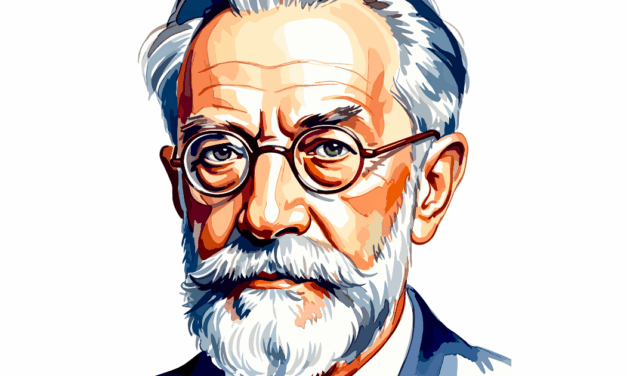
Such is true for the French polymath Blaise Pascal (1624–1663), whose work I have studied, written about, and taught for nearly fifty years. Let us consider three misconceptions, which are intellectual injustices against a great Christian intellectual.
But before examining these charges, a basic principle must be stated: Pascal is smarter than you are. Although he lived to be only 39 years old and was chronically ill his entire adult life, he made brilliant scientific and mathematical discoveries, invented probability theory and the calculator, engaged in sophisticated theological controversies, and began writing a profound work of apologetics, which, although never finished, has been published and republished since 1670 as Pensées (or Thoughts).1 This consists of over nine hundred fragments — some of which are finished thoughts, some more suggestive or programmatic — that were to be developed and organized into a comprehensive Christian apologetic.
Given these accomplishments, it is wise to consider deeply what Pascal wrote and not settle for cliches, sound bites, and slogans that are merely dismissed. Pascal did not finish his apologetic for Christianity, which comes down to us as the Pensées. This makes interpreting his philosophy and apologetic difficult, but not impossible. However, he is easier to take out of context for this reason. Nevertheless, his genius shines through.
We should not be glib about Blaise Pascal — of all people. Even when he is wrong, he is, again, smarter than you are.2 But he usually is not wrong, although he has been falsely accused of many errors. Three are common: that his wager argument is fallacious; that he put emotion ahead of reason in religion; and that he gave up scientific pursuits after becoming more ardent as a Christian. Since I have written on this elsewhere (and sometimes at great length), I will be brief but will offer further documentation in the endnotes. My goal is simply to sweep away some misconceptions so that the real Pascal may speak truth to our condition afresh.
The Wager Argument: Smarter Than You Think
A graduate philosophy student told me he was not a Christian because of Pascal’s wager. His father, a Christian, gave this spurious version. “No one knows if God exists or not. If he does exist, we are better off in the afterlife if we believe in him. If we fail to believe in him and he does exist, we gain only some worldly pleasures but miss out on eternal life and go to hell. Therefore, we should believe in him, or at least try to.” Where to begin?
First, Pascal gave reasons to believe in God and that Christianity as a worldview was true, despite his dismissal of natural theology. He appealed to Christianity’s explanatory power concerning the human condition (we are great and wretched, given creation and fall), the miracles and resurrection of Jesus Christ, the wisdom of Christ’s teaching, Christ’s supernatural fulfillment of prophecy, and much else.
Second, the wager is given for a skeptic who is not convinced by the evidence. So, Pascal tries to move him by an appeal to self-interest. The man should pursue religious faith since there is so much to gain if Christianity is true and he believes, and so much to lose if Christianity is true and he fails to believe. He then encourages the man to engage in religious practices that may help him to believe, as has been true of many others. This is not an appeal to self-imposed brainwashing, but a kind of devotional experiment. So, while the wager can be criticized even if it is presented properly, it is not a crass appeal to selfishness and brainwashing based on Christianity’s lack of evidence.3
Reasons of the Heart
The wager is sometimes paired with a short statement by Pascal to make it appear that he claimed there are no objective reasons to believe in Christianity. Unlike the wager fragment in Pensées, which is quite long, this statement is brief and says nothing directly about religion (although other fragments about the heart do). “The heart has its reasons of which reason knows nothing: we know this in countless ways.”4
Pascal’s epistemology is rich and rewarding, but I must be brief. By “heart” Pascal means rational intuition, an organ of knowing. He does not mean mere emotion or anything irrational. By “reason” Pascal means inferential reasoning — or calculation — that proceeds idea by idea and which draws from empirical evidence. To use contemporary language in epistemology, Pascal is distinguishing basic beliefs (known directly) and non-basic beliefs (known through evidence and inference). He is neither disparaging reasoning nor saying that religious belief is only a matter of blind faith.5 This fragment summarizes an articulate and impressive epistemology in general and epistemology of religious belief. It is no appeal to fideism.
Religion and Pursuit of Science
It is sometimes claimed that Pascal gave up his scientific pursuits after his “second conversion,” which was recounted in the “night of fire” memorial he had sown into his jacket, and which was found only after his death. This fits the false narrative that religion is hostile to science.
After his dramatic “second conversion,” Pascal did not pursue mathematics or science as intensely as previously, but he did not renounce them. Part of the reason for this may have been increasingly poor health, along with his desire to produce his Apology for the Christian Religion (which became the unfinished Pensées). Moreover, he seemed to associate his former successes in mathematics and science with his struggle with pride. Nevertheless, in 1658 during a sleepless night due to a terrible toothache, he turned his attention to a mathematical puzzle called the cycloid, which concerns the curve made by a point on the circumference of a circle traveling over a flat surface. Pascal published the piece and issued a challenge with a monetary reward to others to outdo his calculations. The fact that Pascal won the competition (only two others entered) is less important than the contribution the publication made to the development of integral calculus.6
From Misconceptions to Truth
A large part of my intellectual career has been well spent explaining the thought of Blaise Pascal and defending him from the caricatures and misrepresentations that keep people from appreciating his manifest genius in science, philosophy, and apologetics. This short essay has taken up only three such defamations, but they are among the most commonly voiced. Once they are cleared away, one can begin to understand and treasure Pascal for who he truly was and become richer for it.7
Douglas Groothuis, PhD, is Distinguished Professor at Cornerstone University and Seminary and author of Beyond the Wager: The Christian Brilliance of Blaise Pascal (IVP Academic, 2024).
NOTES
- The best complete edition in English is Blaise Pascal, Pensées, ed. and trans. A. J. Krailsheimer (Penguin, 1995).
- My major philosophical disagreement with this brilliant man is his rejection of natural theology. However, it took me an entire dissertation to make my case against him. For a summary of my objections, see Douglas Groothuis, “To Prove or Not to Prove,” Beyond the Wager: The Christian Brilliance of Blaise Pascal (IVP Academic, 2024) and my doctoral dissertation, To Prove or Not to Prove: Pascal on Natural Theology, Philosophy Department, University of Oregon, 1993. My theological disagreement consists in my Protestant soteriology as opposed to his Roman Catholic views. However, his Jansenist theology was much more biblical that that of the Jesuits he opposed. See Groothuis, “Theological Controversy,” Beyond the Wager.
- For an in-depth account of the wager, see Groothuis, “Wagering a Life on God,” Beyond the Wager.
- Pascal, Pensées, 127.
- See Douglas Groothuis, “The Heart Has Reasons,” Philosophy in Seven Sentences: A Small Introduction to a Vast Topic (IVP Academic, 2017).
- This paragraph is adapted from Groothuis, Beyond the Wager, 29.
- Besides my work, I recommend Michael Rota, Taking Pascal’s Wager: Faith, Evidence and the Abundant Life (IVP Academic, 2016) and Thomas V. Morris, Making Sense of It All: Pascal and the Meaning of Life (Eerdmans, 1992).