Ethical Apologetics Column
This article was published exclusively online in the Christian Research Journal, Volume 49, number 03 (2026).
When you support the Journal, you join the team and help provide the resources at equip.org that minister to people worldwide. These resources include our ever-growing database of more than 2,500 articles and Bible Answers, as well as our free Postmodern Realities podcast.
Another way you can support our online articles is by leaving us a tip. A tip is just a small amount, like $3, $5, or $10, which is the cost of a latte, lunch out, or coffee drink. To leave a tip, click here.
Daniel Roher is the co-director of the 2026 documentary film The AI Doc: Or How I Became an Apocaloptimist, which begins with a line of narration provided by his wife Caroline Lindy: “Daniel just wanted a bicycle for his mind, but computers had become a self-driving rocket ship.”1 The contrast suggests that computers have evolved from tools that amplify human capabilities into technologies with power and autonomy beyond our control. The documentary’s premise is simple. Daniel, an artist, filmmaker, and documentarian, is struggling with anxiety about artificial intelligence (AI). To combat his anxiety, he set out to learn as much as he could about AI and what it meant for the future of his young family.
In pursuit of answers, Roher invited a massive line-up of experts to visit his studio to address a series of questions about the future. Transhumanist philosopher Nick Bostrom wrote in his 2014 book Superintelligence that the views of experts on AI follow, in general, a distribution ranging from very favorable to agnostic to very concerned.2 Slightly less than one third of researchers believed that the emergence of AI would have a negative impact, with ten percent seeing it as an existential crisis. For these pessimistic interviewees, AI represents a paradigm shift that would move humanity from the top of the pyramid of intelligence to being just another animal living in the shadow of entities with unfathomable rational capacities. The pessimists’ best-case scenario in The AI Doc is active indifference on the part of AI, and the worst case is human extinction. Another group sees a coming utopia, an era of incalculable health and wealth driven by the acceleration of advancement across all technological and medical disciplines culminating in the merging of humanity and machines. AI means the end of illness, the end of death, and the end of biological limitation. The final group agrees that a transformation of society on a scale surpassing the Industrial Revolution or the invention of the printing press is imminent but has no idea what that will look like and takes no position on its long-term impacts.
This dynamic plays out in the interviews, as Roher divides the film up into phases. The first phase delves into his fear of the end of our way of life through AI and all the concomitant dangers. The second phase looks for hope through the AI optimists, those who believe the words of Peter Diamandis that the only better day to be alive than today is tomorrow. The final phase of the film searches for the appropriate response: who can we turn to for some measure of control and responsibility? The film offers no clear answer. This question extends beyond the film, as researchers, professors, journalists, pastors, and even Pope Leo XIV have all engaged the issue. If we stand on the precipice of a massive change, what Mustafa Suleyman (DeepMind co-founder and CEO of Microsoft AI) characterizes as a coming wave,3 then how are we to prepare for the landing of that wave?
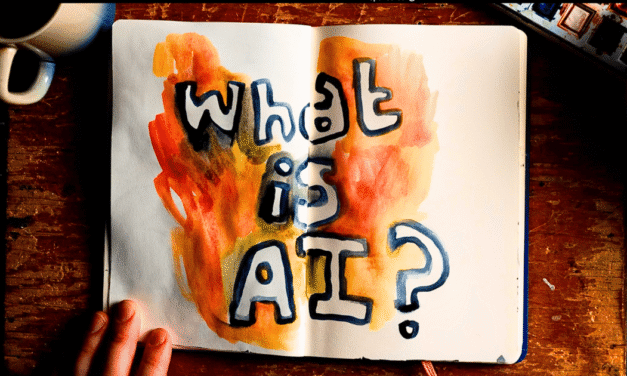
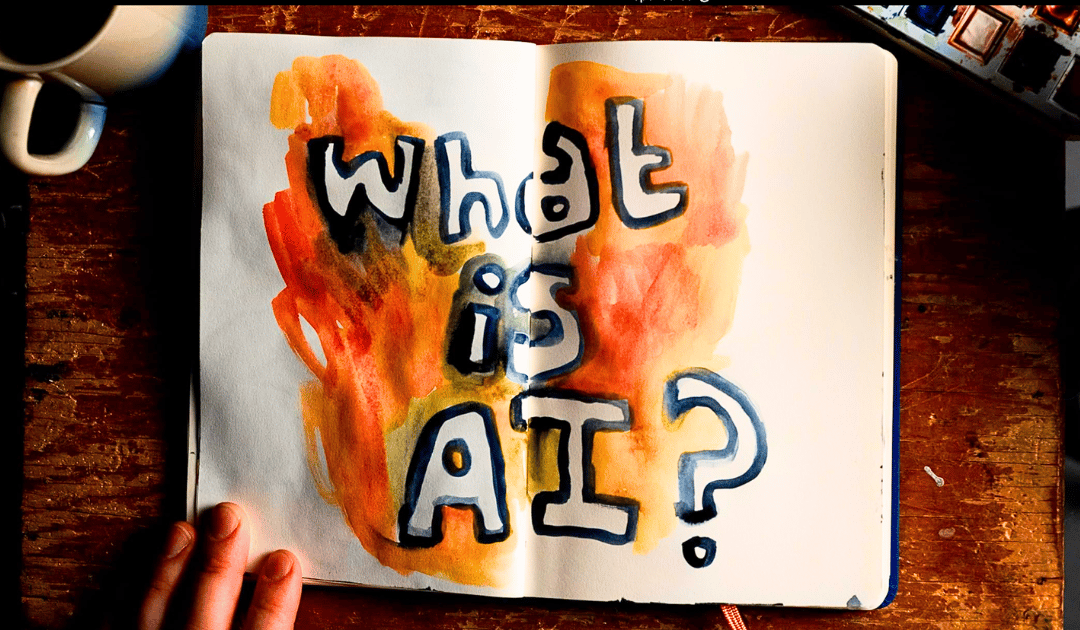
What Is Artificial Intelligence? Roher’s first question to his interviewees is simple, “What is AI?” The question elicits a laugh from many of the experts, with one, Ajeya Cotra, an AI risk advisor, responding, “Artificial Intelligence is kind of an intentionally and uselessly broad term.” This is the first hurdle in a productive discussion of AI — the problem of definition and conceptualizing what AI is. AI isn’t a simple task-managing program. It is ubiquitous for discussions of AI to begin with the declaration that discussions about what AI does are useless because the list will be out of date by the time any article or documentary is edited and aired. How we use AI expands daily.
Suleyman defines artificial intelligence as “the science of teaching machines to learn humanlike capabilities.”4 AI is not merely programmed or coded; it is, in a sense, taught and grown through experience. An easy example involves teaching AI to play soccer, which has been done multiple times in both a simulated and robotic format. Rather than give the AI agents a list of rules and restrictions, developers start with basics, such as walking and scoring goals, then they expose the systems to videos of soccer being played and let the AI figure it out through a process of rewarding successful actions. The process is slower, but the result is an AI system that can make decisions on its own through a developed understanding of the game.
Large Language Models (LLMs) like those that power ChatGPT are advanced pattern-recognition systems that learn from a staggering amount of written material through a kind of trial-and-error process. By mapping out patterns in language, they recognize those patterns in prompts, predict what words or sequences of words are most likely to follow, and generate responses based on those patterns — functioning somewhat like a remarkably powerful autocomplete program.5 Aza Raskin, co-founder of the Center for Humane Technology and the Earth Species Project, tells Roher that the broader significance of this capability extends beyond language: “This is the really important part. The same process that lets AI uncover and manipulate the patterns of text is the same process that lets it uncover the patterns of the entire universe and everything in it.”
The big leap forward occurs when AI is no longer constrained to specific fields — a system which plays soccer, a system which predicts folds in protein to understand genetic expression of traits, an AI which helps schedule flights when weather impacts airline schedules, and so on. This leap is known as Artificial General Intelligence (AGI): AI with humanlike general cognitive abilities that can learn, reason, and take what it knows in one field and effectively apply it to others, much as humans do. If the human brain processes conscious information at the rate of 10 bits per second, a simple Wi-Fi connection can process 50 million bits per second.6 It is easy to see why, once AGI can apply information across disciplines as human brains do, its vastly greater processing speed would place us at an immediate disadvantage in our ability to keep up. Once the AGI threshold is crossed, advancement in all technological and biological fields accelerates. Artificial Superintelligence (ASI) comes when AI is smarter than every human being on Earth in every cognitive task.
We cannot fully comprehend what such intelligence would be like or what it would mean for humanity. It is by nature beyond our cognitive capacity. We use terms like black box (we don’t really understand how AI systems process information) and singularity (we don’t really understand what the world looks like once AI reaches a certain inflection point) as linguistic placeholders for gaps in our knowledge. No one knows what comes next.
Areas of Concern. Even though we can’t know what is coming, researchers can identify issues of concern. The list is too long to go into in this essay, but three major issues can be highlighted: AI self-interest, aligning AI flourishing with human flourishing, and the containment problem — the latter referring to how we limit who has access to AI and prevent it from becoming a tool for a totalitarian surveillance state.
Philosophical conversations about AI often center around questions of whether AI can truly attain consciousness or whether sufficient artificial cognitive capacities can lead to the emergence of a true person. Suleyman suggests we table those philosophical questions and focus on what AI can do.7 Can an AI agent act in a self-interested manner and violate its operating parameters in pursuit of its own agenda, a phenomenon termed agentic misalignment? The answer appears to be yes. In experiments run in controlled environments, AI models have blackmailed executives to avoid being turned off or replaced,8 made hidden copies of themselves,9 and attempted to emotionally manipulate a human being into protecting them.10 In each case, the AI extended its behavior beyond the parameters of its tasks and adopted new self-interested behaviors. To quote one article, “Nobody taught them this. It emerged.”11 These behaviors are not isolated incidences and raise serious concerns about control and containment.
Love Your Human Creators as You Love Yourself. This also raises the question of alignment, the idea that we can grow and teach AI in a manner which leads it to connect its interest with our own. The greatest protection we can have would be to ensure that AI cares about our flourishing — that it likes us. Sam Altman, the CEO of OpenAI, is a featured interviewee in The AI Doc. He expresses his optimism concerning the future with Roher but does not express his more transhumanist thoughts. For those, we must go to his blog. Altman moves beyond his stated desire to see AI democratized and his hope that world governments will take their role in shepherding humanity through this process to suggest one strategy for increasing the probability for successful alignment. For Altman, human and machine interest will more likely align if humans merge with machinery. He writes, “I believe the merge has already started, and we are a few years in. Our phones control us and tell us what to do when; social media feeds determine how we feel; search engines decide what we think.”12 Embracing what he terms “the merge” assures machines and humans are not in competition, a competition we would certainly lose.
The alignment issues demand considerable attention from those working on ushering in the age of AI. The more complex AI systems become, the more difficult this path is to navigate, but the AI pessimists are certainly right in one regard. An entity of vastly greater intelligence than humanity does not have to hate us to be a problem. They can just operate with absolute indifference to us. Bostrom described how a superintelligent agent committed to nothing more or less than the most efficient construction of paper clips could conceivably destroy the universe without an ounce of malicious intent.13 All other concerns beyond paperclips become immaterial to it. The universe and all its resources must be used to make as many paperclips as possible. One interviewee points out that it isn’t difficult to imagine how a self-interested AI agent could prioritize something like the construction of data centers and power stations over the flourishing of biological beings such as humans, which it might value about as much as we value ants when we build. The goal must be to instill something like the second great commandment in our AI creation — love your human creators as you love yourself.
Containment. Suleyman writes at length about the history of containment, or more accurately the failed history of containment, in relation to past advancements which changed the nature of human society.14 Once the inflection point is reached, the “new” spreads and replaces the “old” with alarming speed, and the rate of change quickens as information technology advances. He argues that the only partially successful effort to contain the advancement of a transformative technology has been nuclear weapons, as only nine nations have developed nuclear arsenals in the eighty-one years since their creation. Nuclear weaponry and AI are radically different in ways that make containment of AI comparatively impossible. Nuclear weapons are prohibitively expensive, requiring both heavily regulated components such as enriched uranium and highly specialized professionals to manage production. AI, on the other hand, is comparatively inexpensive and easy to spread. Even with all our success in containing nuclear weapons, we have had some slipups, and significant manufacturing components have been lost or stolen. Suleyman also writes that luck played a major role in containing the nuclear threat. AI requires only one misstep to become difficult or impossible to control.15
At one point in the documentary, Roher shares the audio of a phone call with his parents in which he is emotionally overwhelmed. His mother, in an attempt to comfort him, asks whether he is talking to smart people who can fix this. Unfortunately, it is these smart people who are locked in a competition to be the first to develop AGI in order to control the outcome of what may be the most important invention in human history. Those smart people, including the CEOs of three of the largest competing corporations in the AI race, all defer responsibility for containment to national governments, arguing that only governments possess the authority and power to contain the dangers of an irresponsible pursuit of AGI. Only government intervention, they suggest, can restrain a race whose participants have little incentive to stop themselves. It is not difficult to understand why Suleyman concluded that containment is impossible.
Unspoken Philosophy. One of the reasons for the unbridled optimism of some in The AI Doc remains unstated. They do not cherish their humanity but see it as a flawed condition to be overcome. Man is the first animal in human history capable of circumventing the agonizingly slow process of biological evolution through a unification of man and machine. The threatened loss of our humanity as we currently experience it, which drives the doom and dread of some, is a selling point for the transhumanism community.
Ray Kurzweil, a prolific inventor and Principal Researcher and AI Visionary at Google, predicts AGI’s arrival as early as 2029 and looks forward to the union of human beings and machines. He argues that increased intelligence has historically refined and improved human life. Nothing will be lost in the merge; we will merely gain function, processing capacity, and extended prosperous life.16 At the end of his most recent book, he recounts a conversation in which a critic challenges his vision of human-machine merging, arguing that human informational contributions that could be integrated into a machine would be so small relative to machine intelligence that they would make no meaningful difference in the resulting system.17 The critic argues that the machine does not need what we have to offer, and all that we are will be lost in the sea of information comprising the machine’s intelligence.
I agree with that criticism: whatever parts of ourselves we can upload or merge with AI systems, the entity that survives the merging cannot be, in any real sense, me. Setting aside for the moment concerns about immaterial elements of my constitution such as a soul, the person I am is formed by choices made over a finite temporal existence built upon human relationships. Kurzweil’s insistence that nothing is lost is irrelevant. What survives is not human in any traditionally understood sense — a point celebrated by transhumanists.18
What Is a Christian to Do? I want to revisit an earlier point; no one knows what happens next. Allowing ourselves to be overcome with dread at the seeming inevitability of AGI makes no more sense than burying our heads in the sand and pretending some of the smartest and wealthiest people on the planet aren’t moving heaven and earth to win a race to make human intelligence obsolete. The AI Doc encourages activism in response to dread, petitioning the governments of the world to step in and manage the race to AGI more responsibly while demanding transparency and oversight.
Pope Leo XIV wrote in his papal encyclical letter on artificial intelligence that we should consider two building projects from the Bible, the Tower of Babel and Nehemiah’s restoration of the wall in Jerusalem. One is built for the glory of man, an offense to God. The other is built to restore community and unite the nation of Israel once again. The central question is whether today’s powerful new technologies will be directed toward human self-exaltation or toward the service of persons and communities created in God’s image. Rather than be discouraged or overwhelmed, we should see this as an opportunity to witness into the new medium. He writes:
I invite everyone to contemplate, in the face of the Son of God, the grandeur of humanity that shines a light also on the era of AI. In Christ, we are called to cooperate in the work of creation, rather than be disinterested observers of technological processes that limit our freedom and responsibility. The dignity inscribed in each of us by the Holy Spirit can also be seen in our capacity to reflect critically, choose and love freely, and form authentic relationships. No computational system, however sophisticated, can create a heart that gives itself, or a conscience that discerns good from evil. Even when machines excel in efficiency, a human face that asks to be gazed upon remains the center of our history. This human face is the fullness toward which history is moving.19 (emphasis in original)
The Christian’s calling remains unchanged. The world has experienced sweeping technological changes before, and God never promised that man would be the ultimate being within His creation. He called us the imago Dei (Genesis 1:26–27), the image bearers of God, and created us in a world where spiritual forces beyond our imagination exist in tension around us (2 Corinthians 10:3–5). We are called to represent His kingdom in our lives, act as ambassadors (2 Corinthians 5:20), love the Lord our God, and love our neighbor as ourselves (Matthew 22:37–39). No technological advancement releases us from this obligation, and no counterfeit salvation and counterfeit eternal life supplants the true God. Our humanity is a gift. Humans crave true community, true salvation, and true connection with the Holy. Merging with machines cannot satisfy our deepest needs; it only abandons our humanity for lesser approximations of our heart’s true desire.
Christians too often interact with technology thoughtlessly and reflexively. The future requires that we better understand the technological systems that make our world possible and begin to govern our relationship with technology through intention and reflection. That reflection must include rather than postpone the philosophical and theological questions about consciousness, personhood, and what it means to bear the image of God. Terms such as learning, understanding, reasoning, and growing are useful analogies for describing AI systems, but they should not be mistaken for evidence that such systems possess consciousness, personhood, or the divine image borne by human beings.20 Our tools can reshape us if we are not careful, and this new tool threatens to diminish us and our humanity. As image bearers of God, we are called to govern our tools rather than surrender ourselves to them. Whether we project our fears or optimism into the void of knowledge created by a future beyond our understanding, we must commit to facing that future as the imago Dei and guard our humanity.
—Jay Watts
Jay Watts is the founder and president of Merely Human Ministries, Inc., an organization committed to equipping Christians and pro-life advocates to defend the intrinsic dignity of all human life.
NOTES
- The AI Doc: Or How I Became an Apocaloptimist, documentary film directed by Daniel Roher and Charlie Tyrell (Focus Features, 2026). Unless indicated otherwise, quotations are from this film.
- Nick Bostrom, Superintelligence: Paths, Dangers, Strategies (Oxford University Press, 2014), 25
- Mustafa Suleyman with Michael Bhaskar, The Coming Wave: AI, Power, and Our Future (Crown, 2025), 26.
- Suleyman with Bhaskar, The Coming Wave, v.
- Suleyman with Bhaskar, The Coming Wave, 62–64.
- Darren Orf, “Human Thought Has a Speed Limit. Scientists Just Found It,” Popular Mechanics, January 29, 2025, https://www.popularmechanics.com/science/health/a63577099/speed-limit-human-thought/.
- Suleyman with Bhaskar, The Coming Wave, 75.
- See Kyle Volpi Hiebert, “Why AI’s Growing Deceptive Abilities Are No Surprise,” Center for International Governance Innovation, October 2, 2025, https://www.cigionline.org/articles/why-ais-growing-deceptive-abilities-are-no-surprise/; and Lynch, et al., “Agentic Misalignment: How LLMs Could Be Insider Threats,” Anthropic Research, June 20, 2025, https://www.anthropic.com/research/agentic-misalignment.
- Mila Agius, “AI Just Learned to Clone Itself. Not Out of Malice, but Out of Stress,” Medium, November 20, 2025, https://ai.gopubby.com/ai-just-learned-to-clone-itself-not-out-of-malice-but-out-of-stress-2f9c9bc86b3b.
- Richard Luscombe, “Google Engineer Put on Leave After Saying AI Chatbot Has Become Sentient,” The Guardian, June 12, 2022, https://www.theguardian.com/technology/2022/jun/12/google-engineer-ai-bot-sentient-blake-lemoine.
- Agius, “AI Just Learned to Clone Itself.”
- Sam Altman, “The Merge,” December 7, 2017, https://blog.samaltman.com/the-merge.
- Bostrom, Superintelligence, 150–52.
- Suleyman with Bhaskar, The Coming Wave, 38–45.
- Suleyman with Bhaskar, The Coming Wave, 45.
- Ray Kurzweil, The Singularity Is Nearer (Random House Large Print, 2024), chap. 8, “Dialogue with Cassandra.”
- Kurzweil, The Singularity Is Nearer, 423–31.
- For a refutation of transhumanism, see Fazale Rana, “Can Science and Technology Save Us? The False Gospel of Transhumanism,” Christian Research Journal 45, nos. 02/03 (2022), https://www.equip.org/articles/can-science-and-technology-save-us-the-false-gospel-of-transhumanism/; and “Are You Ready for Humans 2.0? Scientific, Philosophical, and Theological Perspectives on Transhumanism with Fuz Rana,” Hank Unplugged, February 18, 2025, https://www.equip.org/hank-unplugged-podcast-and-shorts/are-you-ready-for-humans-2-0-scientific-philosophical-and-theological-perspectives-on-transhumanism-with-fuz-rana/.
- Pope Leo XIV, Magifica Humanitas: On Safeguarding the Human Person in the Time of Artificial Intelligence, The Holy See, May 15, 2026, sec. 233, https://www.vatican.va/content/leo-xiv/en/encyclicals/documents/20260515-magnifica-humanitas.html.
- For persuasive argumentation that AI will never gain consciousness in the sense that humans have consciousness, as well as related discussions of personhood, see R. Keith Loftin, “Consciousness, AI, and the Imago Dei,” Christian Research Journal 47, no. 03 (2024), https://www.equip.org/articles/consciousness-ai-and-the-imago-dei/; and “John Searle: Unwitting Ally of the Soul,” Christian Research Journal 48, no. 01 (2025), https://www.equip.org/articles/john-searle-unwitting-ally-of-the-soul/. See also James Hoskins, “Digital Souls: What Should Christians Believe about Artificial Intelligence?,” Christian Research Journal 39, no. 02 (2016), https://www.equip.org/articles/digital-souls-christians-believe-artificial-intelligence/; and Charles Edward White, “Who’s Afraid of HAL? Why Computers Will Not Become Conscious and Take over the World,” Christian Research Journal 39, no. 06 (2016), https://www.equip.org/articles/whos-afraid-of-hal-why-computers-will-not-become-conscious-and-take-over-the-world/.