Listen to this article (23:34 min)
Theological Trends Column
This article was published exclusively online in the Christian Research Journal, Volume 49, number 01 (2026).
When you support the Journal, you join the team and help provide the resources at equip.org that minister to people worldwide. These resources include our ever-growing database of more than 2,500 articles and Bible Answers, as well as our free Postmodern Realities podcast.
Another way you can support our online articles is by leaving us a tip. A tip is just a small amount, like $3, $5, or $10, which is the cost of a latte, lunch out, or coffee drink. To leave a tip, click here.
“Sometimes how we believe,” writes Dr. Preston Sprinkle in Embodied: Transgender Identities, the Church, and What the Bible Has to Say, “is just as important as what we believe” (emphasis in original). Sprinkle’s conversational, friendly, and confident authorial voice is both appealing and provocative. As I read his books and listened to his podcasts, I found myself moved and compelled by the stories of so many people who have found life difficult and alienating. It took me many months to adjust my mind to the implications of his bold claim. “The content of what we say is significant,” he goes on. “We should reject lazy thinking, unbiblical theories, and convoluted illogical reasons for what we believe. But if our posture and tone don’t communicate love, the content of our ideas will be powerless.”1
Sprinkle occupies no small position in American evangelicalism. With a PhD in New Testament from Aberdeen University, over two decades of interviewing those who identify themselves by the LGBTQ acronym, books, conferences, and the NIV Upside-Down Kingdom Bible (Zondervan, 2024), Sprinkle may be considered an expert on many trending topics. He has carved out a sphere of influence most particularly, however, in the sexuality debate.
His contention, if one could possibly sum up so great a body of work, is that because sexual minorities have been so excluded from and injured by the church, it is necessary for Christians to alter the manner, the tone, and sometimes even the vocabulary of faith. The content, as he says, is “significant,” but because it has been communicated so unlovingly, many LGBTQ people have not come to know the Lord nor inhabit those spiritual communities that ought to have given them space to flourish and grow.
In the sections below I briefly discuss some of the particular views Sprinkle espouses. What does he think about pronoun hospitality? Are “Side A” Christians really Christians2 Does he think it’s acceptable to adopt a Trans identity? Each of these questions has clear and, for the most part, direct answers. Taken together, however, the answers, I believe, create further alienation and conflict. Affable and relaxed though he is, it is Sprinkle’s continual pressure that, I believe, has helped to unmoor and in many cases divide the Christian witness surrounding sexuality during the last five years at least.
For it is not really the faithfulness of the church, nor the loving witness of Christians, that saves sinners from their doom. Rather it is the message of Christ Himself that is the seed that grows into eternal life. The perplexing mystery of God entrusting His gospel to sinners as the means to draw yet more sinners to Himself works only when the message itself is the power, and not the people whose mouths utter it. In a sinful, sex-saturated world, the only path to life is the plain, spare gospel of Jesus Christ.
Curriculum, Conferences, and Compassion. In 2017, Clare DeGraaf and Sprinkle formed The Center for Faith, Sexuality and Gender. At that time, Sprinkle was the president and DeGraaf “the chairman and CEO.” They wanted “to help leaders cultivate a more robust biblical ethic of marriage, sexuality, and gender,” and “to help churches and organizations create a safe and compassionate environment for LGBT+ people, their families, and anyone wrestling with their sexuality and gender identity.” “If LGBT+ men, women or their families ever leave our churches over theological differences, that should sadden us,” she writes. “But if they left because we were unkind to them, that would sadden Jesus.”3 The center publishes curriculum, online courses, and hosts conferences. Alongside the Center, Sprinkle sits behind the mic of the Theology in the Raw podcast where he interviews guests on subjects ranging from AI to immigration to abortion, hell, non-violence, mental health, evangelism and mission, and, crucially, gender and sexuality.
Theology in the Raw, by design, is a place for people to share their stories and views, and for Sprinkle to listen and engage. The excellent production values shouldn’t fool the listener. Sprinkle isn’t looking to nail down one particular view, but rather to bring people who are in the process of sorting issues out for themselves into the wider conversation. Many of his interviews are informative, others deeply moving. On March 5, 2026, for example, Sprinkle interviewed Remington (“Remi”) Rathjen about his same-sex attraction, his story of church abuse and hurt, sexual abuse, and his relationship with Jesus. Sprinkle introduced Rathjen simply as his friend, and admonished listeners to keep an open mind and heart.4 Likewise, on July 7, 2021, Sprinkle interviewed Scott Newgent, a person who transitioned from female to male and who subsequently began to advocate against the medical transitioning of children from one sex to another.5 In both cases, Sprinkle maintained a friendly, non-judgmental aspect. He was — and is — kindness itself.
Strangers and Allies. As the sexuality debate continues to rage inside and outside the church, some have embraced the term “sexual minority.” This category might include anyone who aligns him or herself with the LGBT acronym — lesbian, gay, bisexual, transgender. “Many people add a Q (‘Queer’ or ‘Questioning’),” writes Sprinkle in People to Be Loved. The “Q” acts as “a catchall for all sexual minorities. And if you want to show off the fact that you took a human sexuality class in college, you can roll out the ever-growing acronym LGBTTQAIA: Lesbian, Gay, Bisexual, Transgender, Transsexual, Queer/Questioning, Asexual, Intersex, Ally.”6 The concept is that of a group of people who do not find that their sexual preferences or gender expressions match those of the majority culture. Like an immigrant community in a strange land, this group has a language all its own, a lens through which the Bible is interpreted, a posture toward the world outside. Many in this group feel embattled, as though they have never and will never find full acceptance within and among the majority culture.
Ironically, as American society in general has fractured, increasing numbers of people have found ways to add themselves to the identity flag, to become part of a group that has won enormous acceptance across all institutions. In some cases, to be able to find oneself on the acronym is essential for meaningful personhood. And yet the church has largely resisted the efforts of those who take the acronym as a serious and acceptable lens through which to view the world and faith.
Sprinkle has sought, tirelessly, to remedy that situation. “Many Christians,” he insists, “view ‘homosexuality’ through the lens of what they see and read in the media and don’t think about the fourteen-year-old-Awana champ who is isolated, depressed, and contemplating suicide because he experiences same-sex attraction and has no one at home or at church to talk to — no one who would listen, anyway.”7 “Let me get real with you,” he writes a little bit later. “I have become so discouraged over the years at how evangelicals have postured themselves against the LGBT community. And it’s not just my isolated experience. According to the statistics, when young non-Christians were asked about the first thing that came to mind when they thought of evangelical Christianity, you know what they said? Ninety-one percent said that the first thing that comes to mind when they think of Christians is that Christians are ‘antihomosexual.’ Really? Antihomosexual? Is that what defines us?”8 (emphasis in original).
The heart of Sprinkle’s work is to draw people who identify themselves according to these various categories into the church. He desires that the church make them feel loved. Pleading for empathy for those enduring attractions they didn’t choose and can’t get rid of, he asks, “How do you know that all gay and lesbian people are having sex? Are you peeking through the window? Should someone call the cops? If there is a ‘gay lifestyle,’ then there must also be a ‘straight lifestyle’: a pre-packaged stereotype that accurately describes every heterosexual on the planet.”9
People to Be Shown the Door. Not surprisingly, the church at large has been slow to alter its vocabulary, if not also its tone and posture. Sprinkle focuses his ecclesiastical lens on the testimonies and experiences of individuals suffering from gender dysphoria and same-sex romantic inclinations. Always committed to faithfully reading the Scriptures, Sprinkle nevertheless sets the experiences of the so-called gay, lesbian, bisexual, and queer individual in the center of the discussion, using the Bible as a sort of answer to the pain and trouble of the individual. In People to Be Loved, Sprinkle begins the book with the account of a young man who “realized he was different” and “endured relentless and ongoing bullying throughout kindergarten.” His experiences in elementary school were “tarnished with terror.” He suffered “chronic migraines, debilitating depression, suicidal thoughts, and a whole host of other mental and physical problems.” Sprinkle quotes the young man, “My name was not Eric, but Faggot. I was stalked, spit on, and ostracized.”10
Likewise, Embodied begins with the story of Lesli, a person who eventually found acceptance in a church community, but not before being pushed out. Lesli’s preferred pronouns are “they/them.” The first time Lesli really needed help and tried to find it in the church, it didn’t go well. “Lesli explained their dysphoria to [the pastor],” recounts Sprinkle, “hoping for some pastoral guidance. Instead of offering guidance, Lesli recalled, ‘My pastor escorted me out the back door of his office and told me to never come back again. And I didn’t. I didn’t step foot in a church for the next eighteen years. I hated Christians, especially pastors, from that point on.’”11 Eventually, almost two decades later, Lesli was accepted by a Christian pastor who offered pastoral care and acceptance into the community. Sprinkle goes out of his way to say that Lesli “lives their faith in ways I only dream of.”12
Nomenclature Wars. Adding insult to harm, for Sprinkle and those for whom he advocates, instead of accepting the criticism and beginning to more persistently meet sexual minorities where they are, many in the church over the last decade have become mired in a linguistic bog, arguing with untold levels of pedantry about the word “gay.” Baffling to Sprinkle, and others like Nate Collins and Gregg Coles who regularly come on his podcast to discuss the issue, is the unloving environment this argument creates. While Christians debate about what we can call each other, people outside the church don’t understand what the big deal is. Why can’t people just use the obvious word that clearly best describes their experience? A person who is attracted to members of the same sex is gay, so why not say it?
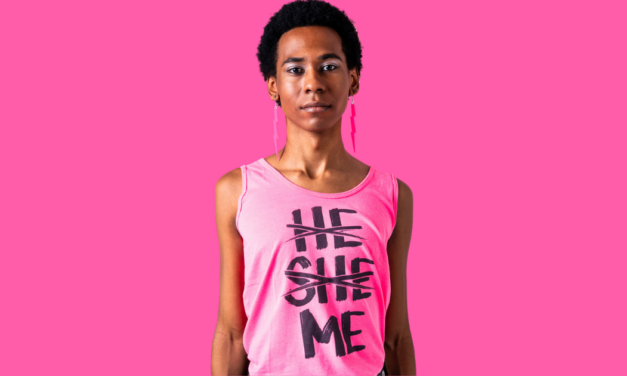
Similarly, what is the big deal about using a person’s preferred pronouns? People who suffer from severe gender dysphoria, like Sprinkle’s friend Lesli, are not under any illusion about church members’ supposed acceptance of alternative sexual inclinations.13 For Sprinkle, to use someone’s chosen pronouns is a simple way of honoring their dignity as a person. It communicates the love and respect this vulnerable population most particularly needs because they are so often excluded from its warmth.
A Biblical Sexual Ethic. Sprinkle is not willing to say that the subject that has occupied so much of his professional life constitutes essential doctrine within the church. Like many of us, he sees a growing cloud of division along the horizon. “My guess,” he writes, “is that it won’t be long before nonaffirming Christians [those who do not affirm same-sex relationships or transgender identities] will be in the minority. Whether we realize it or not, the evangelical church is on the verge of a catastrophic split.”14 He calls “people on both sides” to “think deeply about how they view those on the other side.” Should they worship together? Is it merely a “simple disagreement on how to interpret a few passages?” Or, as many have been saying the whole time, “is it a gospel-issue that is a threat to orthodoxy?”15
For Sprinkle, though he lands on the side of traditional marriage, a view he takes through the thoughtful examination of Scripture,16 and espouses the male/female binary articulated in both the Old and New Testaments,17 he nevertheless seems to accept the separation of gender identity from biological sex.18 Moreover, he does not believe issues of sexuality and gender impinge on the gospel and ultimately concludes that the issue is non-essential, that is, adiaphora — Christians can disagree about aspects of same-sex sexuality and transgender-related questions without threatening orthodoxy.19
“When I look at the evidence,” he wrote in 2015, “the weight seems to support the nonaffirming view thus far. The key biblical passages on marriage don’t just assume opposite-sex marriages because that’s what was known in the culture of the day.” He saw, back then, that “For Jesus, it was the creation of ‘male and female’ oddly fronted to his argument about divorce (Mark 10:6–7),” and that, “For Paul, diversity within the Trinity and the different roles of Christ and the church parallel sexual difference in marriage (Ephesians 5:22–33; cf. 1 Cor. 11:3).”20 The short-hand term for this orthodox and ubiquitous position of the church through history is the “biblical sexual ethic,” and Sprinkle still espouses it.21
Why Sprinkle has maintained the view that what the Bible teaches about sexual ethics does not occupy an essential place within Christian theology and doctrine can only be a matter of speculation. It might be that he does not consider same-sex attraction to be intrinsically sinful.22 He also no longer believes in a literal eternal hell.23 But most of all, I think it might be the decision to set the experiences of mortal creatures in the center of the frame and then to read the Bible through the lens of that human experience. The salvation offered to those who feel alienated and in sorrow ends up being, necessarily, a humanly derived one — of our love being the healing agent inside the church.
How Long Should We Keep Talking? For whatever reason, God chose to spread the news of the Kingdom through the lips and pens of His creatures. The Scriptures themselves are the peculiar miracle of human speech superintended by God. Christians are able to affirm, in the same breath, that God breathed out the text and that the human authors, in their own voices, with their own personalities, wrote down what He was saying (2 Timothy 3:16; 2 Peter 1:21). The church, similarly, is the peculiar miracle of human love superintended and governed by God’s Spirit. We sinners who were once bound to sin and death, now saved by the Lord’s great mercy, turn and invite other sinners to join us (Romans 10:15). The only barrier to this communion is human pride, the refusal to accept the label of sinner.
Making the case to the “nonaffirming crowd” that Jesus’ “strict sexual ethic” should be seriously considered by them, Sprinkle uses a curious turn of phrase. “Jesus,” he says, “pulls repentance and obedience out of our souls, not by laying down the law, but by laying down love.”24 This, for me, is emblematic of the imprecise and cavalier manner in which Sprinkle approaches the Scriptures. Over and over again in the Bible we are told that we are “dead” in our “trespasses and sins” (Ephesians 2:1), that “None is righteous, no, not one” (Romans 3:10, see vv. 10–18), that “all have sinned and fallen short of the glory of God” (Romans 3:23).25 The 1662 prayer of General Confession sums up the biblical view of the individual this way: “We have offended against thy holy laws, We have left undone those things which we ought to have done, And we have done those things which we ought not to have, And there is no health in us.” Sinner asks that God will have mercy on “us miserable offenders.”26
It’s hard for me to see how it is possible, in this modern age, to tell the truth to people about their sinful and spiritually dead condition in a way that will make them feel affirmed about their temporal existential identities. This, again, is one of the central paradoxes of the Christian faith. It is only in relinquishing all hope of the identities and loves and consolations of this world that we are able to grasp a hold of Christ. We, “like sheep,” the prayer says, “have followed the devices and desires of our hearts,” and they were so wrong, they were so death-bound, that we had no hope in ourselves.27
It seems to me that it is those who do not desire to engage in pronoun hospitality, who are cautious about the term “Gay Christian,” who communicate anxiety about the souls and ultimately the happiness of all people who evince the real love of God for sinners. To be “in conversation” with those who are trying to drag the catastrophe of their sins, and the inclinations that produce them, into the pew is a dangerous game. If you think that God desires not the death of sinners, but that they would turn to Him and live, you will be quick, perhaps even sharp, to warn about any condition or action that might separate someone from the love of God.
But even if it is the case that a lack of love has driven people from the church — a contention I do not accept — to say such a thing puts the word of life in the hands and control of mere Christian sinners. That isn’t what God does when He entrusts us with His precious Word. He doesn’t make the growth of the Kingdom of God through time and space the conditional property of sinners. On the contrary, He works some kind of peculiar miracle. He puts His words into the mouths of all kinds of people, even donkeys — both real (Numbers 22:28) and metaphorical — and always accomplishes His will. “For as the rain and the snow come down from heaven and do not return there but water the earth, making it bring forth and sprout, giving seed to the sower and bread to the eater; so shall my word be that goes out from my mouth,” says the Lord to Isaiah. “It shall not return to me empty, but it shall accomplish that which I purpose, and shall succeed in the thing for which I sent it” (Isaiah 55:10–11). I praise God that He, the moment a sinner turns to Him, pours out His mercy and goodness, that He empowers those who trust in Him to “live a godly, righteous, and sober life, To the glory of his holy Name.”28
— Anne Kennedy
Anne Kennedy, MDiv, is the author of Nailed It: 365 Readings for Angry or Worn-Out People, rev. ed. (Square Halo Books, 2020). She blogs about current events and theological trends on her Substack, Demotivations with Anne.
NOTES
- Preston Sprinkle, Embodied: Transgender Identities, the Church, and What the Bible Has to Say (David C Cook, 2021), 154, Kindle Edition.
- “Side A” refers to people who believe that God has created and blessed monogamous homosexual relationships. For discussion, see Anne Kennedy, “Identity and Obedience in Revoice 2021,” Christian Research Journal 45, no. 1–2 (2022), https://www.equip.org/articles/identity-and-obedience-in-revoice-2021/.
- Clare DeGraaf, “The Center for Faith, Sexuality and Gender,” September 11, 2017, https://www.claredegraaf.com/post/the-center-for-faith-sexuality-and-gender.
- Preston Sprinkle, “What It’s Like to Be a Christian with Gender Dysphoria,” Theology in the Raw with Preston Sprinkle, YouTube, March 5, 2026, video, 59:27, https://www.youtube.com/watch?v=wPBF4N6L90E&t=101s.
- Preston Sprinkle, “A Transman’s Unexpected Thoughts on Trans* Related Issues: Scott Newgent,” Theology in the Raw with Preston Sprinkle, YouTube, July 7, 2021, video, 1:10:20, https://www.youtube.com/watch?v=zazsZ_HO3LM.
- Preston M. Sprinkle, People to Be Loved: Why Homosexuality Is Not Just an Issue (Zondervan, 2015), 22, Kindle Edition.
- Sprinkle, People to Be Loved, 23.
- Sprinkle, People to Be Loved, 79.
- Sprinkle, People to Be Loved, 23.
- Sprinkle, People to Be Loved, 13.
- Sprinkle, Embodied, 18.
- Sprinkle, Embodied, 226.
- Sprinkle, People to Be Loved, 82.
- Sprinkle, People to Be Loved, 150.
- Sprinkle, People to Be Loved, 150.
- See Sprinkle, People to Be Loved, chapter 2, “Holy Otherness.”
- See Sprinkle, Embodied, chapter 4, “Male and Female in the Image of God.”
- In Embodied, Sprinkle writes, “Showing that biological sex matters to our identity is important, but this alone doesn’t answer the question of how we should think about gender. We need to hit the brakes if you think we’re ready to say that biological sex and not gender (identity or role) defines who we are. Again, it’s not as if the Bible directly addresses a case where someone’s gender identity is at odds with their biological sex” (76, emphasis in original).
- See Sprinkle, People to Be Loved, esp. 152; Embodied, esp. 76–77.
- Sprinkle, People to Be Loved, 39–40.
- Jo Frost, Peter Lynas, Preston Sprinkle, “Speaking Up on Sexuality and Gender — Live Interview with Dr. Preston Sprinkle,” Being Human, Evangelical Alliance and Theology in the Raw, YouTube, October 8, 2025, video, 44:07, https://www.youtube.com/watch?v=IH2iHE4OTlw.
- Sprinkle, People to Be Loved, 145–49.
- Preston Sprinkle, “The Annihilation View of Hell,” Theology in the Raw with Preston Sprinkle, YouTube, November 22, 2020, video, 43:11, https://www.youtube.com/watch?v=nemKBJoCoKI.
- Sprinkle, People to Be Loved, 74.
- Bible quotations are from the ESV.
- The Book of Common Prayer and Administration of the Sacraments and Other Rites and Ceremonies of the Church 1662 (IVP Academic, 2021), 3.
- The Book of Common Prayer, 3.
- The Book of Common Prayer, 3.