Listen to this article (14:40 min)
Fringe Files Column
This article was published exclusively online in the Christian Research Journal, Volume 49, number 02 (2026).
When you support the Journal, you join the team and help provide the resources at equip.org that minister to people worldwide. These resources include our ever-growing database of more than 2,500 articles and Bible Answers, as well as our free Postmodern Realities podcast.
Another way you can support our online articles is by leaving us a tip. A tip is just a small amount, like $3, $5, or $10, which is the cost of a latte, lunch out, or coffee drink. To leave a tip, click here.
“It is the way of heaven to show no favouritism. It is for ever on the side of the good man.”
—Lao Tzu in Tao Te Ching1
“Jesus answered, ‘I am the way and the truth and the life. No one comes to the Father except through me.’”
—John 14:6 NIV
I was in college the first time that I heard of Taoism.2 I was taking an independent study course about world religion, and the Tao Te Ching was on the reading list. This was my introduction to Chinese religion, and as a 20-year-old, I found the Tao Te Ching to be a bit overwhelming, especially with its use of analogies and paradoxes. As I’ve spent more time studying religion and worldviews, philosophies like Taoism have gotten easier for me to understand, but I also recognize that while many Christians have heard of Taoism, few know what it actually teaches or why it continues to influence spirituality around the world, even the West.
Although it’s difficult to know how many Taoists are in the world (estimates range widely from about 12 million to as many as 173 million), it’s possible you may get an opportunity to discuss Taoism at some point, especially if you are in certain parts of Asia, such as China, Taiwan, and Vietnam, or in some metro areas of the United States, such as New York City, Chicago, or Los Angeles. The Internet has also brought worldviews like Taoism into our homes through social media apps like TikTok, so it’s a good idea for us to be able to have a response should our children have questions about it. Before we can respond to Taoism from a Christian perspective, though, we need to know Taoism’s origins and its philosophy, its relationship to other Chinese worldviews, and how it entered the West through things like meditation and holistic health.
The Tao
The root of the word Taoism is Tao, which is most commonly translated as “the way.” Religion scholar Winfried Corduan notes that “the true Dao lies beyond words.”3 This means that the Tao is something humanity can’t comprehend with regards to language. Philosophically speaking, this means that Taoism is a contemplative worldview. The Tao is considered the ultimate principle or underlying reality that gives rise to and orders the universe. A dedicated Taoist will strive to follow the way at all times:
“In his every movement a man of great virtue
Follows the way and the way only.
As a thing the way is
Shadowy, indistinct.”4
In other words, the Tao is difficult for the human mind to comprehend and understand, but the Taoist must not give up trying to follow the way, even if it’s “shadowy” or “indistinct” because that’s how they become people of “great virtue.”
As with many religions, there are different schools within Taoism. Not all Taoists are religious — some are philosophical. The Tao isn’t a god to be worshipped — it’s the nameless force of the universe. While philosophical Taoism focuses on this principle, religious Taoism incorporates a pantheon of gods and deities from Chinese folk religion like the Three Pure Ones5 and immortals, those who have achieved great wisdom and power by living in harmony. They participate in religious activities that may seem similar to religions like Christianity — they have temples, priests, and modes of worship like prayer and meditation. They also have religious festivals and other community rituals to venerate their ancestors and worship various deities. Religious Taoists also seem to be working toward immortality, something American philosopher and professor of Chinese Herrlee Creel said was a “striking” difference between religious and philosophical Taoism. “The mere idea of all this toiling for immortality is repugnant to that of wu wei, not striving,” Creel explained.6
No matter if they are philosophical or religious, though, most Taoists have similar beliefs regarding the Tao, but religious Taoists are more likely to have traditions or rituals they follow to live in harmony with nature, such as the Nine Virtues, the Five Precepts, and the Ten Virtuous Deeds, which will be discussed below.
The History of Taoism and Basic Beliefs
As with other ancient worldviews, it’s difficult to nail down Taoism’s history, so traditional viewpoints about Taoism’s birth are varied. Some believe Chinese archivist Lao Tzu/Laozi (around 600–500 BC) is the founder of Taoism, but others attribute the religion to the Yellow Emperor, Huangdi, which would date Taoism way back to between 2697 and 2597 BC. Chinese philosopher Zhuang Zhou/Zhuangzi is said to have expanded Lao Tzu’s work during the Warring States Period (476–221 BC). However, scholars debate if Lao Tzu or Zhuang Zhou existed at all; some scholars note the lack of evidence regarding their lives and that the texts they supposedly wrote were written by multiple unnamed authors.7 Whether they are legend or were real people, Lau Tzu and Zhuang Zhou are often called the “fathers of Taoism,”8 and their writings, the Tao Te Ching and the Zhuangzi, are the foundational texts of Taoism, considered by adherents to be holy texts.
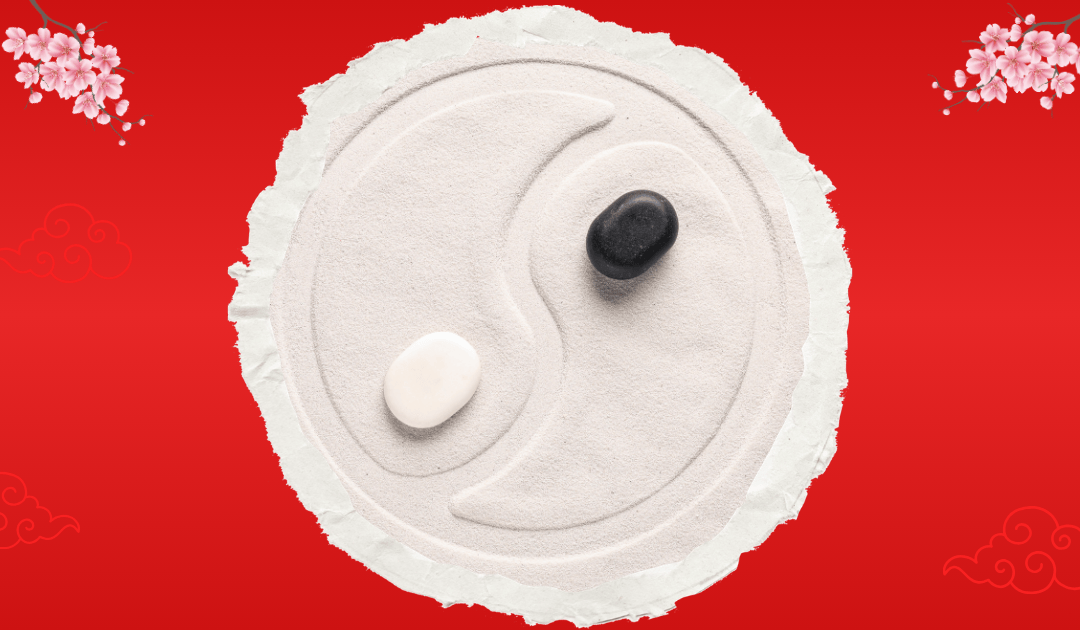
Tao Te Ching. Attributed to Lau Tzu, the Tao Te Ching is one of the primary holy books used by both religious and philosophical Taoists. Through its cryptic sayings and analogies, it teaches that humanity should live in harmony with the natural flow of the universe, focusing on simplicity, spontaneity, and balance (yin and yang).9 Perhaps the most important teaching from the Tao Te Ching is regarding wu wei, the concept of actionless action — acting without intention. Corduan describes this as “a condition of letting oneself become at one with nature without trying to manipulate one’s condition.”10 The idea is that if we stop competing for our own advantage, we find harmony and peace with others and nature. Thus, if we achieve wu wei, the Dao will benefit all.
Zhuangzi. The Zhuangzi, which is typically attributed to Zhuang Zhu, was likely written after the Tao Te Ching, and is thought to add more color to the core tenets of the Tao Te Ching through anecdotes. Rather than offering rigid doctrines (Zhuang Zhu thought truth relied on perspective), the Zhuangzi encourages Taoists to embrace the natural flow of reality through openness and humility, often illustrated through passages like the “butterfly dream.” The story questions the nature of reality and identity, with a man wondering if he had a dream about being a butterfly, or if he was a butterfly dreaming that he was a man.11 In the end, the Zhuangzi emphasizes deep alignment with the Tao, but in a more experiential and less structured way than the Tao Te Ching.
The Nine Practices/Virtues
Religious Taoists often follow specific ethical precepts known as the Nine Practices or Nine Virtues:
- Nonaction (wu-wei)
- Softness and weakness
- Guarding the feminine
- Being nameless
- Clarity and stillness
- Being adept
- Being desireless
- Knowing how to stop and be content
- Yielding and withdrawing12
As you might discern from these Nine Practices, Taoists value a way of life that considers others, works with the natural order of things, and sets limits without worrying about competition or status. These principles come primarily from the Tao Te Ching, and some Taoists consider them a part of their lifestyle, setting aside times in their schedules to focus on specific virtues. For instance, religious Taoists might spend a nine-day period developing their ability to be still, trying to maintain mental clarity even in stressful situations.13 Ultimately, the Nine Practices are intended to help Taoists work toward harmony with others and nature.
Other Key Taoist Ethical Teachings
The Five Precepts of Taoism parallel those found in Buddhism: 1) do not kill; 2) do not steal; 3) do not engage in sexual misconduct; 4) do not lie; and 5) do not take intoxicants. Along with the Five Precepts, Taoists also stress the importance of the Ten Virtuous Deeds, which overlap with the Five Precepts and highlight the Taoist desire for ethics. The Ten Virtuous Deeds are:
- Respect for Parents
- Loyalty
- Compassion
- Endurance
- Honesty
- Selflessness
- Preserving Life
- Building Infrastructure (like walls and bridges)
- Benefiting Others
- Studying Sacred Texts (like Taoist scripture)14
As you can see, these go along with the Five Precepts well, and they give Taoists specific guidelines they can follow to help them live most harmoniously with others and nature. Many of the Virtuous Deeds focus on taking care of people, from parents and leaders to neighbors and, really, all living beings, including animals. A virtuous Taoist will continue working toward the way, which is evidenced by their dedication to the Taoist sacred texts. One thing to remember is that, as with many other religions, some adherents follow some slight variations of the ethical codes. Following the precepts and deeds is voluntary, but they provide guardrails to the key Taoist notion, which is to flow with nature.
Taoism’s Relationship to Other Religions
A common misconception about Taoism is that it is the same worldview as other Eastern religions such as Buddhism, Hinduism, Shinto, or Confucianism. In China in particular, Taoism, along with Buddhism and Confucianism, comprise the “three teachings.” While all three are considered the foundation of Chinese culture and spiritual practices, each is unique.15 This isn’t to say there aren’t similarities, but it doesn’t do any of them justice to lump them all together and pretend they are all the same. Let’s consider Taoism against Buddhism and Confucianism.
Taoism and Buddhism. Although Taoism and Buddhism both emphasize inner peace and balance, their methods for achieving those goals are different. Taoists try to live in harmony with nature or the flow, whereas Buddhists try to break free of the cycle of suffering and rebirth. Further, Taoists believe that humanity is aligned with nature and have a soul that transcends death, but Buddhists believe there is no permanent soul — that is, their souls are constantly in flux and change continuously. Ultimately, Taoists work toward alignment with the timeless flow of nature, while Buddhists want to achieve Nirvana, a deathless, peaceful state. Again, Taoism and Buddhism may be practiced by a single individual, but the priorities and beliefs are not the same.16
Taoism and Confucianism. One theory suggests that Zhuang Zhu was influenced by Confucius and the former impressed the latter, but it seems that historically Taoism was offered as an alternative to Confucianism. That said, Corduan notes that “Confucianism provided an external framework for traditional and Daoist practices.”17 One key idea that unites Taoism and Confucianism is the concept of filial piety (one of Taoism’s Ten Virtuous Deeds). One divergence is that while Confucianism emphasizes harmony with others, Taoism emphasizes harmony with the Tao, which leads to harmony with everything else. Confucianism pushes for order in society, and Taoism prioritizes alignment with nature and inner freedom.
Taoism in the West
Some scholars say the distinction between philosophical Taoism and religious Taoism isn’t really a distinction at all and that the distinction is better stated as between Chinese and Western Taoism. In the West, Taoism is often taught as a philosophy, removing the religious parts, which may be one reason why we see so few Taoist temples and monasteries, especially in the United States.
Taoist ideas have influenced meditation practices, wellness culture, and modern spirituality. Many people in Western culture are drawn to Taoism because it feels peaceful, flexible, and less doctrinal than many organized religions. Its focus on balance, nature, and inner calm resonates in a fast-paced modern world. Westerners may also see evidence of Taoism if they encounter certain types of meditation or wellness techniques, especially if that includes Tai Chi, which is rooted in Taoism.18
A Christian Response
Taoism shares various similarities with other Eastern traditions and differs from Christianity in its core metaphysical assumptions. There is common ground: both Taoism and Christianity value life, inner transformation, and humility. However, for the most part, the religions are incompatible. For example, Taoists view the Tao (the way) as impersonal, while Christians worship a personal God who wants to be in relationship with humanity. Also, Taoism is non-dualistic, seeing no real difference between good and evil; rather, good and evil work together to achieve balance and harmony. On the other hand, Christians see a clear distinction between good and evil. Finally, Taoists attain salvation by following the natural order, but in Christianity, the way to salvation is found only through Christ (John 14:6).
If you find yourself in a conversation with a Taoist, remember to be gentle and kind as you offer a defense for your hope in Christ (1 Peter 3:15). Meaningful dialogue happens when both parties are willing to listen to understand rather than simply respond or argue. As a Christian, stand firm on truth (John 17:17), remaining “steadfast, immovable, [and] always abounding in the work of the Lord, knowing that in the Lord your labor is not in vain” (1 Corinthians 15:58 ESV). Recognize that compromising your faith on small things can lead to larger compromise and sin (see James 1:14–15). Do not incorporate Taoism into your life. Ultimately, you need to ask yourself if the Bible is true. If it is, then Jesus is the only way to salvation, and that’s not what Taoism teaches. Remember that Christians are saved by grace, through the work of Jesus. Christians cannot earn their salvation.
Lindsey Medenwaldt is an assistant professor of business and economics at Northwestern College and the author of Bridge-Building Apologetics (Harvest Apologetics, 2024) and co-author with Douglas Groothuis of the forthcoming book, What If Jesus Is Right? (Tyndale Elevate, 2026). She holds a master’s in apologetics and ethics from Denver Seminary, a JD from St. Mary’s School of Law, and a master’s in public administration from Midwestern State University.
NOTES
- Lao Tzu, Tao Te Ching, trans. by D. C. Lau (Penguin Classics, 1963), Book Two, chapter LXXIX, part 192, 141.
- Taoism is also referred to as Daoism. Both are pronounced with a “d.” Academics tend to use Daoism while Taoism is used in popular literature and Western culture.
- Winfried Corduan, Neighboring Faiths: A Christian Introduction to World Religions, 2nd ed. (IVP Academic, 2024), 439.
- Lao Tzu, Tao Te Ching, trans. by D. C. Lau (Penguin Classics, 1963), Book One, chapter XXI, parts 48–49, 78.
- The Three Pure Ones are not really gods, but more like primordial expressions of the Tao. They symbolize the Taoist’s desires of stillness, harmony, and wisdom. See “The Three Pure Ones — Sanqing (三清): The Highest Principles of the Taoist Tradition,” The Center of Traditional Taoist Studies, https://tao.org/tao/pantheon-of-taoist-gods/three-pure-ones/.
- Herrlee G. Creel, What Is Taoism? and Other Studies in Chinese Cultural History (University of Chicago Press, 1970), 9.
- See Isabelle Robinet, Taoism: Growth of Religion, trans. Phyllis Brooks (Stanford University Press, 1997), 25–35.
- Robinet, Taoism, 25.
- For more about yin and yang, see Lindsey Medenwaldt, “The Lunar New Year Animals: A Christian Examination of the Chinese Zodiac,” Christian Research Journal, updated February 11, 2026, https://www.equip.org/articles/the-lunar-new-year-animals-a-christian-examination-of-the-chinese-zodiac/.
- Corduan, Neighboring Faiths, 439–40.
- To learn more about the butterfly dream, see Raymond Tallis, “Zhuangzi and That Bloody Butterfly,” Philosophy Now, 2009, https://philosophynow.org/issues/76/Zhuangzi_And_That_Bloody_Butterfly.
- Louis Komjathy, “Nine Practices,” Blue Papers from the Daoist Foundation, https://static1.squarespace.com/static/51772022e4b09a5dad8185fb/t/614b3325a404ce558715ffbf/1632318246936/NinePractices_DaoistFoundation.pdf.
- Komjathy, “Nine Practices,” https://static1.squarespace.com/static/51772022e4b09a5dad8185fb/t/614b3325a404ce558715ffbf/1632318246936/NinePractices_DaoistFoundation.pdf.
- Xuan Men Jun, “Taoist Three Refuges, Five Precents and Ten Virtuous Deeds,” Dao World, June 2, 2023, https://dao-world.org/2023/06/02/taoist-three-refuges-five-precepts-ten-virtuous-deeds/.
- The three teachings are interrelated but separate. See Robinet, Taoism, 1. For discussion and evaluation of specific differences, see also Yi-Ying Lin et al., “The Three Teachings of East Asia (TTEA) Inventory: Developing and Validating a Measure of the Interrelated Ideologies of Confucianism, Buddhism, and Taoism,” Frontiers in Psychology 12 (March 2021), https://doi.org/10.3389/fpsyg.2021.626122.
- For accessible overviews of Buddhist belief and practice, see Hank Hanegraaff, “What Are the Basic Beliefs of Buddhism?” Christian Research Institute, February 24, 2023, https://www.equip.org/articles/what-are-the-basic-beliefs-of-buddhism/; and Isamu J. Yamamoto, “Buddhism in North America (Part 1): The Buddha and What He Taught,” Christian Research Journal, Spring (1994), https://www.equip.org/articles/buddhism-and-christianity-the-buddha-and-what-he-taught/.
- Corduan, Neighboring Faiths, 449.
- For more about Tai Chi, see B. J. Oropeza, “Should a Christian Practice the Martial Arts?” Christian Research Journal 4, no. 1 (1991), https://www.equip.org/articles/should-a-christian-practice-the-martial-arts/.