Listen to this article (18:42 min)
Cultural Apologetics and Literary Apologetics Columns
This article was published exclusively online in the Christian Research Journal, Volume 49, number 03 (2026).
When you support the Journal, you join the team and help provide the resources at equip.org that minister to people worldwide. These resources include our ever-growing database of more than 2,500 articles and Bible Answers, as well as our free Postmodern Realities podcast.
Another way you can support our online articles is by leaving us a tip. A tip is just a small amount, like $3, $5, or $10, which is the cost of a latte, lunch out, or coffee drink. To leave a tip, click here.
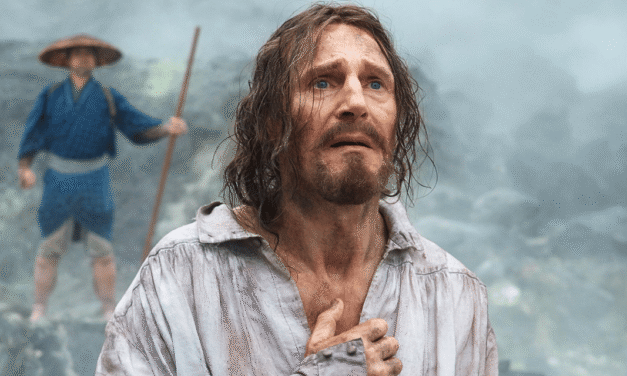
Shūsaku Endō’s 1966 historical novel Silence begins and ends with apostasy.1 Set in seventeenth-century Japan, the novel takes place after Japanese authorities had begun, in the late sixteenth century, to fear that the spread of Catholicism was threatening their political authority and national identity. They outlawed Christianity in 1614 and launched a ruthless persecution of priests and converts.2 It proved so successful that Japanese Christians make up only about one to two percent of the population today.3 The story’s protagonist is a young Portuguese priest, Father Sebastian Rodrigues, who spent his life in pursuit of the face of Christ only to feel abandoned in his greatest moment of trial. In 1638, Rodrigues and two other young priests set out for Japan to refute the reports of the apostasy of their mentor, Father Cristóvão Ferreira, a missionary in Japan for more than thirty years prior to his renouncing the faith under torture. Rodrigues sought a glorious witness for Christ but was unprepared for a system of persecution which required him to witness the torture and murder of innocent villagers. He was even less prepared for God’s silence in response to it all. The novel still resonates strongly today, with the mere mention of the title drawing people into conversations about the fate of the priests, the Japanese Christian martyrs, apostasy under torture, and the challenge of foreign missions in a hostile land.
A major emphasis of my work over the past two years centers on the silence of God, the sense from the believer that God is absent in their pain and struggles — what philosophical theologians refer to as the problem of the hiddenness of God. This can be caustic to faith, contributing to the deconstruction of belief and, borrowing the language of Silence, apostasy. Even for those Christians who remain faithful, the sense of God’s absence becomes a debilitating experience challenging the understanding of what it means to say things like “God is love” and “God is good all the time.” The historically true story of Father Ferreira and Father Giuseppe Chiara, the Italian Jesuit missionary on whom Father Rodrigues is based,4 provided the perfect backdrop for Endō to explore themes which dominated his work: alienation, disillusionment, and the challenges of faith. Endō once compared his Catholicism to an ill-fitting Western suit5 and repeatedly created characters torn between their identity and the choices life forced them to make, people he named the failures of faith. Playing out these ideas in the context of the persecution by the Tokugawa shogunate sets the stage for common challenges to faith to be juxtaposed with uncommon and terrible evil.
Three claims about God arise during the story, either expressed or implied, that are worth further consideration. The first is the charge that God can be unfair, asking too much of individuals He knows will stumble in the face of persecution. The second charge is introduced by a Japanese official offering the basic elements of an argument against God’s existence grounded in allegedly gratuitous evil and suffering. Finally, disappointment with God may represent the most dangerous threat to our faith. Ferreira and Rodrigues are crushed under the spiritual and emotional weight of disappointment with God and the realities of mission work in an unwelcoming and hostile culture. As important as all three of these issues are, and none should be handled frivolously, they don’t justify abandoning faith in God.
The Trouble with Kichijirō. Father Rodrigues’s journey through Japan is haunted by the presence of a despicable coward ostracized from his community and wallowing in self-pity: “What am I to say about this man, the first Japanese I ever met in my life? Reeling from excess of alcohol, a drunken man staggered into the room. About twenty-eight or nine years of age, he was dressed in rags. His name was Kichijirō.”6 Kichijirō denies he is a Christian, drinks excessively, and shirks responsibility. We learn he apostatized from the faith when his brothers and sisters were arrested and tortured, with only Kichijirō renouncing his beliefs. He watched his siblings burn at the stake from within the crowd of witnesses to the execution. Kichijirō publicly renounces Christ at least three more times, each renunciation almost immediately followed by his begging for absolution. Oddly, Shūsaku Endō appeared to personally identify most strongly with Kichijirō.7
Kichijirō’s story is tragic, and he is profoundly broken by his loss of family, community, and subsequent alienation. His repentance, however, appears more emotive than genuine and never leads to lasting change or growth. He invariably denies Christ at the slightest confrontation and then grovels in self-hatred and curses his inability to live a faithful life. It is in these moments of vulnerability we hear Kichijirō’s complaint against God: God treats him unfairly. God knew Kichijirō could not endure persecution and still chose to place him in an environment which exposed his weakness, an assessment with which Father Rodrigues agrees.8 At one point, Kichijirō visits Father Rodrigues in prison, where Rodrigues has been confined only because Kichijirō betrayed him for money after once again renouncing his faith:
“Listen to me, father,” Kichijirō whimpered in a voice that the other Christians could hear. “I am an apostate, but if I had died ten years ago I might have gone to the paradise as a good Christian, not despised as an apostate. Merely because I live in a time of persecution.”9
Did God require too much of Kichijirō and treat him unfairly? The fairness principle, as discussed by physician Farr Curlin and philosopher Christopher Tollefsen, is not merely getting what we deserve.10 It means when we enter a relationship the needs of both sides must be respected; both sides must equally share in the benefits and burdens. A party is treated unfairly when they are restricted from reasonable access to the available benefits. This kind of relationship is impossible to enter into with an all-knowing, all-powerful, transcendent being. It is a category error to consider the events of our lives, no matter how tragic, through this dynamic. God cannot be unfair. The benefits emanate entirely from Him, and the burdens, even the burdens Christ took to the cross, emanate from us. We are not partners but created beings whose lives are not our own, whether living under grace or not. Kichijirō questioned the fairness of God in forcing him to face persecution, as if God were obliged to do otherwise. Kichijirō’s failures, like those of all human beings, are his own.
In the Gospel of Luke, Jesus warns Peter that Satan wants to sift him like wheat, and Jesus prays Peter’s faith will endure. Peter’s success will strengthen his brothers (Luke 22:31–32), just as the faithful witness of the Japanese martyrs initially strengthened the Jesuit missionary movement in the 17th century. God often requires us to face more than we believe we can endure. Our response to those events communicates who and what we are — the sifting exposes character. Kichijirō and Rodrigues believed God was unfair, but God never owed anyone the opportunity to live under the delusion they are more righteous than they are. It might be what C. S. Lewis termed a “severe mercy” for God to allow weaknesses to be exposed.11 Self-deception and apostasy lead to the same end for those without God, as Jesus teaches that many will come to Him who claimed to be His who never knew Him (Matthew 7:21–23). Suffering and setbacks cause real pain but potentially place us in position to abandon a counterfeit grace for true saving grace.
The Problem of Evil and Suffering and the Hiddenness of God. A Japanese official introduced as “an interpreter” challenges Rodrigues’s faith by raising the problem of evil and suffering. “If it is true that God is really loving and merciful, how do you explain the fact that he gives so many trials and sufferings of all kinds to man on his way to heaven?”12 The Japanese weaponized suffering, overwhelming their victims by the extent of the evil they were willing to commit and eroding the faith of Father Rodrigues in the process. Such erosion is possible even in less extreme circumstances. Evil and suffering that appears to be gratuitous remains a barrier between God and some skeptics, often cited as the number one reason people reject belief in God even today.
This argument against theism has two forms, the logical problem of evil and the evidential problem of evil. The logical problem of evil claims it is logically inconsistent for certain things to be true at the same time: (1) God is all loving, (2) God is all powerful, and (3) Evil and suffering exist. If (1) and (2), then not (3). If (3), then either not (1) or not (2). In other words, if (3) is true, (1) and (2) cannot both be true, though either one by itself is still possible. This logical problem has largely been resolved by Christian philosopher Alvin Plantinga in his book God, Freedom, and Evil (Harper and Row, 1974).13 The logical inconsistency is defeated by recognizing that if any possible world exists in which God has morally sufficient reasons for allowing evil and suffering to exist (i.e., to produce free will, soul building, love, empathy, etc.), even if that world is not our actual world, then no logical inconsistency exists with respect to (1), (2), and (3). Philosophers Chad Meister and Paul K. Moser explain that most contemporary arguments now focus on the evidential problem, stated as “given the reality of evil, theism is probably not true, even if it is logically consistent.”14 The claim is that evil is gratuitous and exists in quantities and severities beyond what could be reasonably necessary for God to derive certain goods from it, like soul building or securing free will. Gratuitous evils include pointless animal suffering or, in the case of Silence, the unnecessarily brutal torture and murder of innocent people.
This is the true power of Silence. Endō does not allow readers to evade the question of gratuitous suffering but uses the historical persecution of Japanese Christians to confront an uncomfortable truth. God allows terrible evil for reasons which confound our understanding. Endō demands readers see the brutal deaths of innocent Japanese Christians, the fruits of Jesuit missionaries, and make sense of how a loving God who has the power to intervene at any time does nothing in response. For Endō, God offers condemnable indifference. Consider this passage in which Father Rodrigues witnesses a public execution:
What he could not understand was the stillness of the courtyard, the voice of the cicadas, the whirling wings of the flies. A man had died. Yet the outside world went on as if nothing had happened….On the day of my death, too, will the world go relentlessly on its way, indifferent just as now? After I am murdered, will the cicadas sing and the flies whirl their wings inducing sleep?15
Later, Father Rodrigues witnesses the drowning of three of his fellow prisoners and his former partner Father Francisco Garrpe: “God maintained his unrelenting silence….Did God really exist?”16 There are terrible evils in the world, evils we dare not wave off with a trite explanation. Silence places us in a context where, however we reconcile that evil, we must wrestle with it. Great literature leaves no place to hide. It immerses readers into a narrative where theological and philosophical arguments leave the sterile environment of academic articles and gets dirty in human conflict. Rodrigues sees pain and suffering beyond anything commonly experienced in our lives, his uncertainty and helplessness become our own.
Theodicy is a response to the problem of evil and suffering, but it must be said that theodicies rarely emotionally satisfy anyone. They argue we have good reasons to believe that the presence of seemingly gratuitous evil does not make it more plausible that God does not exist. For example, evidential arguments against God on the basis of evil and suffering tend to be inductive rather than deductive — they are inferences to the best explanation. Any set of premises leading to a conclusion that God probably does not exist must include something like this proposition:
P) Evil exists in such severity and abundance that it is more likely than not that a good and loving God could never have justification for allowing it.
It is not necessary to directly disprove this premise. Undercutting it is sufficient, demonstrating it is not more likely true than untrue. The theist can reply that, stipulating the truth of theism, it is not possible to state with any certainty that God cannot have legitimate reasons to allow evil or even that the evil we see is gratuitous. The eternal nature of an everlasting life with God, which introduces immeasurable unfolding time characterized by love and joy into the evaluation, combined with the recognition that God’s intelligence dwarfs the collective intelligence of all humanity make it improbable that any statement about the acceptable level of evil or the acceptable balance of love and evil is reliable. Stipulating theism is true, that proposition cannot be justified. Suffering is terrible, and innocent animal suffering seems inexplicable, but we just cannot know that premise is more likely true than not, no matter how horrible evil and suffering make us feel.
Additionally, the evil in Silence is not natural evil like the recent floods in Nepal or a fawn dying in a forest fire. The evil in Silence is the moral evil of Japanese authorities attempting to murder Christianity out of existence in Japan. They perform acts of terrible evil and then accuse God for not stopping them. It is odd to declare that the perceived silence of God is the most prominent and problematic feature of the tragedy. Rodrigues knows this and corrects the translator, but the emotional problem of evil — the existential struggle to endure suffering and apparent divine silence — remains even when the logical and evidential problems lack power.
Deep Disappointment and Apostasy. Perhaps disappointment, rather than disbelief, drives the apostasy of the priests. Nothing is as it should be, a shared theme in both Silence and the life and works of its author. Endō felt isolated in Japan as a Catholic Christian, isolated in France as a foreigner, and further isolated due to prolonged and repeated illnesses.17 His frustration becomes personified in Fathers Rodrigues and Ferreira. As artist Makota Fujimura wrote, it is noteworthy that a Japanese author explained his own country through the perspective of a foreigner.18 Rodrigues is an outsider and a critic of Japanese culture, unsure of what to do when the reality of the mission field fails to match his hopes. He knows all the right things to say, gives all the proper theological responses but crumbles emotionally. Nothing is as it should be, not the villagers, not martyrdom, not persecution, nothing.
Endō lays bare the patronizing attitude of the missionaries toward the Japanese. Ferreira characterizes the Japanese as “not able to think of God completely divorced from man; the Japanese cannot think of an existence that transcends the human.”19 Ferreira believes missionary efforts to the Japanese fail because a fatal defect resides in their culture that prevents them from truly knowing God: their grounding for spiritual beliefs lacks the broadly accepted concept of a transcendent spiritual being characteristic of classical Western theism. He believes the Japanese are appropriating the Western language but operating within a more traditional animistic framework: Christianity becomes a new name and new rituals for their old beliefs. He expresses deep disappointment in the supposed unsuitability of the land to nurture the gospel, while insulting the memory of the faithful martyrs who chose to die rather than to step on the image of Jesus. This continues to be felt as an insult by contemporary Japanese Christian academics arguing Ferreira’s failure resulted from his own weak faith and not some defect in the brave men, women, and children who faced death to preserve the Japanese church, which, though small, endures to this day.20
Rodrigues’s internal struggles consume him so completely that he grows insensitive to the misery of others. At one point, he sits in a prison ruminating on the unfairness of how the apostle Judas was treated by Jesus when the snoring of a sleeping guard distracts his thoughts. He complains: “There, fast asleep like a pig, opening his big mouth he could snore just like that….Yes, and that on this, the most important night of his whole life, he should be disturbed by such a vile and discordant noise.”21 It is only when the translator arrives that Rodrigues is informed the sound is not snoring, but the groans of Christians being tortured. His disappointment and failure are complete, and his apostasy follows soon after. Both Ferreira and Rodrigues are the children of failed faith, Endõ’s favorite subject.
Endō denies his audience a clean resolution. Did Jesus command Father Rodrigues to trample His image, or did that moment mirror Jesus sending Judas out to betray Him? Was the apostasy merely for show? The official known as the translator repeatedly encourages Rodrigues that the apostasy doesn’t have to be real, just a physical compromise to provide a public example for others. This seems reminiscent of Gnostic Christians encouraging others to throw a pinch of incense into the fire to make a public demonstration in recognition of the deity of Caesar during Roman persecutions.22 They argued the body is gross material and faith is spiritual.23 What does it matter if a Christian throws in the incense to avoid torture and death if his soul remains untouched? But we are a dynamic union of the physical and spiritual, and what we do physically is an expression of who we truly are. Physical betrayal of Christ is true apostasy. As Christians throughout history testify, it is better to die faithful than to live in betrayal to the author and deliverer of our salvation. To quote Polycarp in his refusal to curse Christ and swear by Caesar: “Eighty and six years have I served Him, and He has done me no wrong. How can I blaspheme my King who saved me?”24
Faithful in Silence and Suffering. Endō’s Silence forces us to confront how a good and loving God operates within a theater of unremitting evil. Endō’s struggles with faith and feelings of alienation helped produce a brutal retelling of a dark chapter in the history of Japan, a chapter which still informs that culture today. It also speaks to those with no connection to Japan by demanding we bear witness. Fujimura writes the ambiguity of the ending is an aspect of a Japanese tradition, hiddenness being central to their art and self-expression.25 Silence highlights differences between the Japanese culture and the Christians who wished to transform it, but ambiguity and hiddenness can be a part of the Christian life with God as well. There are times when there are no easy answers. When we are spiritually unsettled, we must attend to our behavior and character even more.
We must reconcile true evil and suffering in a more matured faith which accommodates the coexistence of the depths of the depravity of the world, even the heartbreaking natural evil common in the ordinary course of events, and the sovereign rule of a transcendent, all powerful, loving God. Overlaying the striking misery in Silence on Romans 8 amplifies its profundity. “I consider that our present sufferings are not worth comparing with the glory that will be revealed in us. For the creation waits in eager expectation for the children of God to be revealed” (Romans 8:18–19 NIV). The words of Paul, a man familiar with how monstrous men could be and how difficult a path God could set for us.
Jay Watts is the founder and president of Merely Human Ministries, Inc., an organization committed to equipping Christians and pro-life advocates to defend the intrinsic dignity of all human life.
NOTES
- Shūsaku Endō, Silence, trans. William Johnston (Picador Modern Classics, 2016), 1.
- See Agency for Cultural Affairs, Government of Japan, Hidden Christian Sites in the Nagasaki Region: Nomination for Inscription on the World Heritage List, chap. 2, 36, https://www.bunka.go.jp/seisaku/bunkazai/shokai/sekai_isan/ichiran/pdf/suisensho_02.pdf.
- Pew Research Center estimates the figure at 2.2 percent: Conrad Hackett et al., “Religious Composition by Country, 2010–2020,” Pew Research Center, June 9, 2025, https://doi.org/10.58094/5shf-2d69. For the commonly cited figure of 1 percent, see, e.g., Sophia Lee, “Growth Is Good. Survival Is, Too,” Christianity Today, March/April 2025, https://www.christianitytoday.com/2025/03/japan-christian-church-survival-faithful-remnant/.
- Cristiano Suriani, “Faith and Betrayal: The Story of Giuseppi Chiara in 17th Century Japan,” Tuttogiappone, https://www.tuttogiappone.eu/faith-and-betrayal-the-story-of-giuseppe-chiara-in-17th-century-japan/.
- See Francis Mathy, “Shusaku Endo: Japanese Catholic Novelist,” Thought: Fordham University Quarterly 42, no. 4 (Winter 1967): 592, https://doi.org/10.5840/thought19674247.
- Endō, Silence, 15.
- Makoto Fujimura, Silence and Faith (InterVarsity Press, 2016), 42.
- Endō, Silence, 82.
- Endō, Silence, 125.
- Farr Curlin and Christopher Tollefsen, The Way of Medicine: Ethics and the Healing Profession (University of Notre Dame Press, 2021), 38–40.
- See Sheldon Vanauken, A Severe Mercy: C. S. Lewis and a Pagan Love Invaded by Christ, Told by One of the Lovers (Harper and Row, 1977).
- Endō, Silence, 96.
- See Brian Leftow, God and Necessity (Oxford University Press, 2012), 547; cf. Graham Oppy, “Logical Arguments from Evil and Free-Will Defences,” in The Cambridge Companion to the Problem of Evil, ed. Chad Meister and Paul K. Moser (Cambridge University Press, 2017), 45ff.
- Chad Meister and Paul K. Moser, “Introduction,” in Meister and Moser, Cambridge Companion to The Problem of Evil, 4.
- Endō, Silence, 128.
- Endō, Silence, 147–48.
- Makoto Fujimura, Silence and Faith (InterVarsity Press, 2016), 33–35.
- Fujimura, Silence and Faith, 39–40.
- Endō, Silence, 161.
- Endō, Silence, Translator’s Preface, xxi.
- Endō, Silence, 176.
- See Pliny the Younger, Letters 10.96 and Eusebius, Ecclesiastical History 4.7.7.
- See Irenaeus, Against Heresies 1.24.5; Clement of Alexandria, Stromata 4.4.
- Martyrdom of Polycarp 9.3.
- Fujimura, Silence and Faith, 11–18.