Listen to this article (21:12 min)
Cultural Apologetics Column
This article was published exclusively online in the Christian Research Journal, Volume 49, number 04 (2026).
When you support the Journal, you join the team and help provide the resources at equip.org that minister to people worldwide. These resources include our ever-growing database of more than 2,500 articles and Bible Answers, as well as our free Postmodern Realities podcast.
Another way you can support our online articles is by leaving us a tip. A tip is just a small amount, like $3, $5, or $10, which is the cost of a latte, lunch out, or coffee drink. To leave a tip, click here.
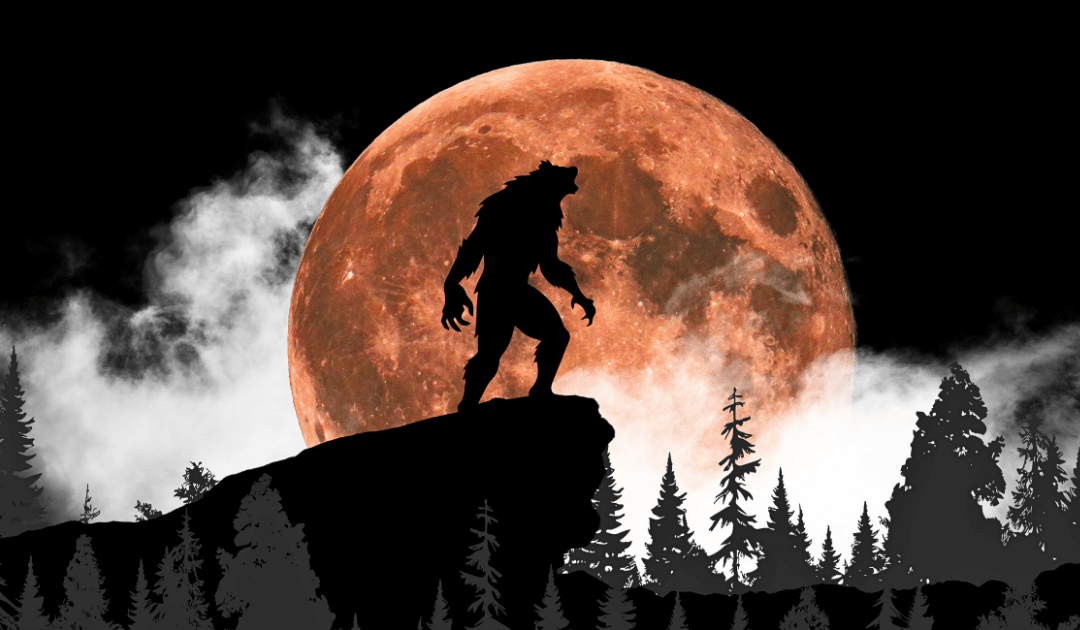
Nobody invented the werewolf.
We know where to go for Frankenstein’s creature. In 1818, Mary Shelley gave him life on the page. Dracula has a birth certificate too, by way of Bram Stoker’s 1897 novel. Trace either of these popular monsters backward, and the history certainly becomes complicated — Stoker did not invent vampires, nor did Shelley create the idea of artificial life — but there are books and authors around which the popular conception of the monsters we recognize today took shape.
The werewolf is a bit harder to pin down. Follow this monster back through cinema and fiction, through early modern trials and medieval chronicles, through Norse sagas and classical literature, and the trail refuses to lead us to a definitive archetype. Instead, we find the werewolf almost everywhere, though never quite in the same form. Men wear wolf skins, behave like wolves, suffer curses that turn them into wolves, assume the shape willingly, endure transformation at the hands of the gods, or find themselves accused by their neighbors of prowling the countryside on four legs.
There is no Dracula of werewolves, no creature that stands as the definitive literary incarnation of the monster. The werewolf has no single authoritative story, no character who became the archetype. The closest we have may be Curt Siodmak’s The Wolf Man, released by Universal Pictures in 1941. Siodmak’s screenplay gathered centuries of scattered folklore into something resembling the modern werewolf we recognize today.1 Lon Chaney Jr.’s doomed Larry Talbot is bitten by a werewolf, becomes one himself, and finds himself trapped between his human identity and the beast he cannot control. That film helped establish or popularize much of the mythology that now seems ancient to us, including the werewolf’s vulnerability to silver and the pentagram as the mark of his next victim.
But Larry Talbot is not Count Dracula. Siodmak was not adapting some great werewolf novel already embedded in the cultural imagination. He was assembling a mythology from pieces, borrowing from older traditions while inventing freely enough that some of what audiences now assume to be ancient werewolf lore is scarcely older than Bugs Bunny. The Wolf Man gave the werewolf something approaching a definitive modern form, but it could not give him a definitive origin.
A Not-So-Familiar Mythology. I first began exploring the origins of the werewolf when I was developing The Lost Son (Nocturn Productions, 2024), an audio drama about a family haunted by a generational curse. Writing a vampire story gives you certain expectations to work with. Dracula may not be the source of every vampire convention, but Stoker provides an enormously influential center of gravity. Werewolves offer no such convenience. Before I could decide what my wereworld could do, I had to decide what, exactly, counted as werewolf mythology in the first place, and that proved more difficult than I expected.
There were several familiar pieces I could have simply adopted, such as the full moon, vulnerability to silver, the bite that passes the curse from one victim to another, and the agonizing physical transformation followed by a night of uncontrollable violence. But these conventions do not all come from the same place, nor are all of them particularly old. Once I started pulling at the threads, the creature I thought I knew pretty well quickly unraveled to reveal a much larger knot of history.
For The Lost Son, that became an opportunity. Rather than treating lycanthropy as something transmitted through a bite, I made it hereditary. The curse passes from father to firstborn son, turning the werewolf into something carried through the bloodline, an inherited darkness from which each generation struggles to escape. As I explained in an interview about the series, lycanthropy became a metaphor for a particular darkness passed down from one generation to the next, something beyond hereditary illness that ultimately concerned the heart.2 But inventing my own “rules” also forced me to seriously consider what people believed about werewolves before Hollywood came along.
To this end, the word itself proved a helpful starting point. The “were” in werewolf is the Old English wer, meaning “man.” A werewolf is, quite literally, a man-wolf, which helps us pretty quickly distinguish between the history of wolves appearing in folklore and the history of human beings becoming wolves, assuming their characteristics, wearing their identities, or otherwise passing across the boundary that supposedly separates the human from the beast.
And that history is astonishingly old. The Greeks provide some of the most famous examples. Indeed, our word lycanthropy preserves the Greek lykos (“wolf”) and anthrōpos (“human being”). The obvious figure is Lycaon, the legendary king of Arcadia, whose name became inseparable from lupine transformation. Versions of the story differ, of course, but the basic offense involves human sacrifice or cannibalism and a consequent transformation into a wolf. Plato already knew a tradition connecting the rites of Zeus Lycaeus with a man who tasted human flesh and consequently became a wolf. Pausanias later tells of Lycaon sacrificing a child to Zeus and immediately undergoing the transformation. Other Arcadian traditions imagined the condition as reversible. A man who became a wolf might recover his humanity after a period of years, provided that he refrained from eating human flesh.3
But Lycaon is only one branch of the classical tradition. Herodotus wrote of the Neuri, a people whom neighboring Scythians and Greeks claimed became wolves for several days each year before returning to human form, though Herodotus himself was skeptical. And Petronius gives us something startlingly recognizable in the Satyricon. A soldier traveling at night strips naked, urinates around his clothing, becomes a wolf, and runs howling into the woods. Later, his companion discovers that a wolf has attacked livestock and been wounded in the neck. When he returns home, he finds the soldier lying in bed while a physician tends a wound in precisely the same place. Long before Larry Talbot, the essential horror was already there.4
The tradition survives into medieval literature, although not always in ways a modern audience would expect. One of the most important examples is Marie de France’s twelfth-century Bisclavret. Her hero is a respected Breton baron who disappears for three days each week because he becomes a wolf. His terrified wife learns that he requires his hidden clothing to recover his human form and conspires with another knight to steal it, trapping her husband as an animal. Yet the wolf retains his intelligence, recognizes the king, behaves nobly, and eventually takes vengeance upon those who betrayed him. The monster, remarkably, remains the moral center of the story. Marie even begins by assuming that stories of such creatures are already familiar, distinguishing the Breton bisclavret from the Norman garwaf. The werewolf was not an invention she needed to explain because it was a creature her audience already knew.5
But perhaps the most tantalizing of predecessors appears centuries earlier than even the Grecian stories, in Mesopotamian literature. In Tablet VI of the Epic of Gilgamesh, Ishtar proposes herself to Gilgamesh, who responds by reminding the goddess what became of her previous lovers. Among them was a shepherd who faithfully provided her with food. Ishtar struck him and transformed him into a wolf. The punishment is particularly cruel because his own shepherd boys subsequently drive him away and his own dogs attack him. The man who once tended the flock has become the predator the flock must fear.6
There is an interesting biblical parallel to this larger world of human-animal transformation, although we should be careful not to call it a “werewolf story.” Daniel 4 describes the judgment of Nebuchadnezzar, who is driven from society and made to live among the beasts. He eats grass like cattle, his hair grows like feathers, his nails become like claws, and only when his reason returns does he reenter human society. Nebuchadnezzar does not literally become an animal, much less a wolf. But the story operates alongside a familiar imaginative boundary. The proud king loses the attributes by which civilized humanity recognizes itself and descends into the condition of the beast. His restoration is marked accordingly by the return of his reason and his acknowledgment of the sovereignty of God.
All of these examples suggest that beginning the history of the werewolf with silver bullets and full moons badly misunderstands the creature. Even beginning with wolves may be too late. The older and more persistent idea is the were. Across cultures separated by centuries, human beings imagined the terrifying possibility that a person might cross the line between humanity and animality. Sometimes that transformation was punishment, other times it was curse or enchantment. Sometimes the person remained rational inside an animal body, while elsewhere appetite swallowed reason altogether.
The details might wander considerably from one telling to the next, but the ideas at play do not.
The Man Inside the Wolf. Wolves certainly carry their own symbolic freight. They live beyond the firelight, prey upon livestock, travel in packs, and represent a genuine danger to communities in which survival depends upon animals that could disappear overnight into the jaws of a predator. A wolf is dangerous because it is a wolf. The werewolf, on the other hand, is horrifying because he is a man who has somehow become a wolf.
That places the creature within a much larger human fascination with the possibility of becoming animal. The transformation need not always be literal. Among the Norse, warriors could deliberately assume animal identities. The berserkir are traditionally associated with bears, while the úlfheðnar were connected specifically with wolves, their name usually understood in reference to wolf-skins. Old Norse literature remembers such warriors fighting with an animalistic fury that placed them outside ordinary human restraint.7 Whether every fantastic claim about them reflects actual historical practice is another matter, but the image itself is revealing. The warrior becomes more terrible by becoming less recognizably human. He puts on the animal not merely as clothing but as an identity suited to violence.
That movement can run in the opposite direction as well. A person does not always become beastly in order to gain power. Sometimes becoming the beast is what happens when one’s humanity is lost. This is where the mythology adopts a particularly tragic dimension, as the werewolf is often divided against himself. The human being remains somehow present inside the monster, or returns afterward to discover what the monster has done. Larry Talbot does not want to kill, and that is what makes him a tragic figure. The werewolf gives physical form to the terrible possibility that a person can remain himself and yet become something he himself would fear.
History occasionally made that imaginative possibility frighteningly concrete. Between 1764 and 1767, the Gévuadan region of France was terrorized by a series of attacks attributed to what became known simply as la Bête, the Beast. Scores of people were killed, many of them women and children, and descriptions of the animals varied wildly. Wolves were obvious suspects, and enormous hunting parties scoured the countryside. Animals were killed and displayed as the Beast, only for attacks to continue. Royal authority became involved and newspapers carried the story far beyond Gévaudan.8 Rumors circulated that the Beast was a loup-garou,9 and witnesses endowed it with qualities no ordinary wolf should possess. The identification never became the definitive contemporary explanation, but it was available to eighteenth-century French imaginations long before popular culture rediscovered the Beast and made the werewolf connection explicit.
France already possessed centuries of stories about dangerous crossings between the human and the lupine. It had its garwaf in medieval literature, its later loup-garou, and its early modern werewolf accusations and trials. During the sixteenth century, figures such as Gilles Garnier were accused of assuming the form of a wolf and murdering children. Jean Grenair, tried at the beginning of the seventeenth century, claimed that he roamed as a wolf and attacked the young. Whatever we make of such confessions now, the important point is that Europeans possessed a conceptual category ready to receive them. When human bodies appeared torn apart, the imagination did not have to travel far to find something standing uneasily between the figure of a man and the figure of a wolf.
The Beast of Gévaudan occupies a curious place in this particular history. There is no compelling reason to turn the Beast itself into a werewolf. Yet the terror surrounding Gévaudan demonstrates how easily the wolf could become something more than zoological. Once the animal begins killing human beings, particularly with an apparent ferocity or intelligence that witnesses cannot easily explain, the older imaginative world begins pressing in and the question ceases to be what kind of animal could do such things, but what kind of thing could do them.
We call people animals when they behave with particular cruelty. We speak of someone becoming savage, brutal, or bestial. The language assumes that civilization rests upon something requiring maintenance, that human beings possess appetites and capacities for violence that must be governed rather than obeyed. The werewolf — as a cultural image — literalizes that fear. It gives teeth and hair to the failure of restraint. It takes the person who speaks, reasons, loves, remembers, and recognizes moral obligation and reduces him to appetite.
But “reduces” is not quite right either, because the tragedy depends upon something human remaining.
That may be the werewolf’s peculiar contribution to the gallery of monsters that stalk our imaginations each Halloween. The wolf alone could never carry the same weight. We do not morally condemn an animal for being hungry. The wolf kills because it is a wolf. The werewolf, however, horrifies us because the creature doing the killing is also the person who should know better, who may have known better only hours before, and who may awaken afterward horrified by what he has done. The monstrosity depends upon his humanity.
Toward a Theology of Werewolves. It would be easy enough to turn the werewolf into an illustration of sin. There is a man. There is a beast inside the man. The beast represents the sinful nature. Christ saves the man from the beast. Sermon over.
But the werewolf has endured far too long, and in too many different forms, to be packaged into an object lesson that tidy. Cultural apologetics should allow the monster to remain monstrous long enough to understand why generations of people have found the werewolf frightening in the first place.
And the werewolf frightens us because Christianity takes seriously the same contradiction that makes the monster’s existence tragic. Human beings are creatures capable of reason, love, moral judgment, sacrifice, worship, and extraordinary goodness. We are also capable of becoming unlike what human beings ought to be. The Christian account of sin does not require us to believe that evil reveals our “true selves,” as though beneath civilization there waits an animal that was really us all along. Quite the opposite. Sin is tragic because the sinner remains human. The image of God can be marred and disfigured, but the creature bearing it does not cease to be the creature God made.
This is why Siodmak’s Larry Talbot remains such a powerful version of the monster. Talbot is not really frightening because he secretly wants to be a monster. He is frightening because he does not. The Wolf Man is not the liberation of some authentic animal self hidden beneath polite society, but an invasion of the self. Talbot knows what is happening to him, fears what he may do, and cannot finally master the thing he becomes. When morning rolls around, the man must live with what happened while he was the beast. Siodmak’s mythology therefore makes lycanthropy less a fantasy of transformation than a tragedy of divided identity.
There is something recognizably Christian in that tragedy, even if the film itself is hardly Christian allegory. Paul’s anguished language in Romans 7 comes readily to mind, though his argument is more specific than a general description of someone who wants to do good but keeps doing bad things. Paul is describing the terrible frustration produced by life under the law. The commandment itself is good, but it cannot liberate the person from sin’s power. Indeed, Paul chooses the prohibition against coveting to make the point. The command identifies what is good, yet sin seizes the opportunity afforded by that very commandment and produces coveting of every kind. That is the context for the divided “I” who later confesses, “I am not practicing what I would like to do, but I am doing the very thing I hate” (7:15)10 The problem here is not ignorance. The “I” knows the commandment, agrees that the law is good, and even delights in it, yet possesses no power through the law to escape the sin that has taken him captive.11
The werewolf gives that frustration a grotesque physical form. The man can recognize what he ought to be and recoil from what he has become, but recognition alone cannot free him from the power holding him. In both cases, the tragedy lies partly in knowledge without liberation. Knowing the good is not the same thing as possessing the power to become good.
Clemence Housman understood this well. Her 1896 novella, The Were-Wolf, now largely forgotten outside studies of Victorian supernatural fiction, is one of the strangest and most explicitly Christian treatments of the creature. Its werewolf, White Fell, arrives as a beautiful and mysterious stranger who gradually insinuates herself into a household. The character of Christian alone recognizes what she is. His brother Sweyn, captivated by White Fell, refuses to believe him. The resulting conflict sees Christian pursue White Fell through the snow, knowing that she intends to destroy his brother, and willingly spends his own life to prevent it.
Housman is not subtle about what follows. Christian dies with his arms extended like one crucified, and Sweyn finally understands that his brother suffered and died to save him. More strikingly, the blood Christian sheds in willing sacrifice becomes more potent than the holy water he had earlier hoped would destroy the werewolf. Housman describes the efficacy of that blood in terms of the pure heart from which it has been freely poured out for another. White Fell is destroyed, but Sweyn is saved, and the werewolf story becomes a story about the power of self-giving love.
The Christian imagination need not look at the werewolf merely and say, “There is the sinner.” It can recognize that there is the human being who has become divided against himself. There is appetite ungoverned by reason, violence severed from love, power without moral order. There is the terrible possibility of becoming something we never intended to become and doing things we never imagined ourselves capable of doing. But there is also, in Housman’s story especially, the insistence that monstrosity does not have the final word. Against the transformation of human into the beast, she places another kind of transformation, one accomplished not by appetite or violence, but by a person willingly surrendering his life for another.
The werewolf ought to belong comfortably within the Christian imagination. The Christian has never needed to be persuaded that monsters exist. The more surprising claim ought to be that becoming monstrous does not place someone beyond the reach of grace. After all, the most important question in a werewolf story has never been whether the beast is real, but whether the man can come back, and who will have to bleed to bring him home. —Cole Burgett
Cole Burgett is a graduate of Dallas Theological Seminary and the Moody Bible Institute. He currently serves as the Assistant Director of Online and Nontraditional Learning at Corban University, as well as an Assistant Professor of Theology. He writes extensively about theology and popular culture.
NOTES
- Douglas Martin notes that Siodmak, a German Jewish man who fled Germany after the Nazi rise to power, understood the Wolf Man partly through his own experience of an identity and fate imposed upon him. Siodmak later described himself as “the Wolf Man,” connecting Larry Talbot’s unwanted curse with his own experience of persecution in Germany. The screenplay also codified several features that became central to modern werewolf mythology, particularly the association of the werewolf with silver and the pentagram, helping transform a diffuse body of older legends into the recognizable twentieth-century Wolf Man. See Douglas Martin, “Curt Siodmak Dies at 98; Created Modern ‘Wolf Man,’” The New York Times, November 19, 2000, https://www.nytimes.com/2000/11/19/nyregion/curt-siodmak-dies-at-98-created-modern-wolf-man.html.
- In the interview, I discuss the development of the series’ werewolf mythology. I also identify Curt Siodmak’s original screenplay for The Wolf Man, initially titled Destiny, as a major influence, particularly its psychological ambiguity and interest in fate and the power of suggestion. I describe The Lost Son as a deliberate rewriting of traditional werewolf mythology. See Chris Fogle, “Interview with Cole Burgett on ‘The Lost Son’ Series,” Chris Fogle: Pop Xulture, November 3, 2022, https://www.chrisfogle.com/p/interview-with-cole-burgett-on-the.
- The Greek traditions of Arcadian lycanthropy vary considerably. Plato, Republic 8.65d-566a, refers to a rite of Zeus Lycaeus in which tasting human entrails transforms a person into a wolf. Pausanias, Description of Greece 8.2.3 and 8.2.6, connects Lycaon himself with the sacrifice of a child and records the belief that a transformed man could regain human form after nine years if he abstained from human flesh. Pliny the Elder, Natural History 8.81–82, preserves similar Arcadian traditions, including stories of men who became wolves for nine years before returning to human form.
- Herodotus, Histories 4.105, reports skeptically that the Neuri supposedly became wolves for several days each year. Petronius, Satyricon 61–62, offers perhaps the most recognizable ancient werewolf tale, describing a soldier who transforms into a wolf, attacks livestock, is wounded, and later appears in human form bearing the corresponding wound.
- See Marie de France, Bisclavret, in The Lais of Marie de France, trans. Glyn S. Burgess and Keith Busby (Penguin Books, 1986). Marie introduces the tale by explaining that bisclavret is the Breton name for the creature called garwaf by the Normans and briefly acknowledges the established tradition of men becoming werewolves and living in the forest. Her tale is unusual in making the transformed knight sympathetic and rational, while the human beings who betray him supply the story’s real moral corruption.
- The episode is not a “werewolf” story in the later sense, but it provides a remarkably early example of divine punishment expressed through the transformation of a human being into a wolf. See The Epic of Gilgamesh, Tablet VI, lines 58–64, in Andrew George, trans. The Epic of Gilgamesh: The Babylonian Epic Poem and Other Texts in Akkadian and Sumerian (Penguin Books, 1999).
- The association appears prominently in chapter 6 of Snorri Sturluson’s Ynglinga saga, where he describes Odin’s warriors going into battle without armor, raging “like mad dogs or wolves,” biting their shields, and possessing the strength of bears or bulls. The úlfheðnar (“wolf-coats” or “wolf-skins”) appear elsewhere in Old Norse literature as warriors associated specifically with wolves, while berserkir were conventionally associated with bears. The precise historical character of these groups remains disputed, but the literary tradition clearly connects the warrior’s assumption of animal identity with extraordinary ferocity and the abandonment of ordinary human restraint. See Snorri Sturluson, Heimskringla: History of the Kings of Norway, trans. Lee M. Hollander (University of Texas Press, 1964), 10.
- The attacks began in 1764, with fourteen-year-old Jeanne boulet generally identified as the first recorded fatality, and continued until 1767. Contemporary and later counts vary, but roughly one hundred deaths were attributed to the Beast, with women and children comprising many of the victims. The affair became a national sensation through the expanding French press, particularly François Morénas’s Courrier d’Avignon. Local hunts eventually involved thousands of participants before Louis XV intervened, first sending professional wolf hunters and later his own gunbearer, François Antoine, who killed a large wolf in September 1765 and sent its remains to Versailles. The attacks resumed several months later. See Jay M. Smith, Monsters of the Gévaudan: The Making of a Beast (Harvard University Press, 2011) and Lorraine Boissoneault, “When the Beast of Gévaudan Terrorized France,” Smithsonian Magazine, June 26, 2017, https://www.smithsonianmag.com/history/beast-gevaudan-terrorized-france-countryside-180963820/.
- The etymologically redundant loup-garou means “werewolf” and derives from Old French leu (“wolf”) and garoul (“werewolf”), the latter of Germanic origin. See “Loup-garou,” The American Heritage Dictionary of the English Language, 5th ed. (HarperCollins, 2022), https://www.ahdictionary.com/word/search.html?q=loup-garou
- Bible quotations taken from the Legacy Standard Bible.
- Romans 7:14–25 is frequently read as Paul’s description of the continuing Christian struggle with personal sin, with the divided “I” understood autobiographically as the regenerate Paul who loves God’s law while repeatedly failing to obey it. That reading has a long history, but it can obscure the specific argument Paul has been developing. Romans 7 begins with the question of the believer’s relationship to the law (7:1–6), and Paul then defends the law against the charge that it is itself sinful (7:7). His example is not arbitrary. He cites the tenth commandment, “You shall not covet,” and describes sin seizing an “opportunity through the commandment” to produce the very coveting the command prohibits (7:7–8). The language simultaneously recalls Adam and Israel. Sin encounters a divine command, exploits it, deceives, and kills (7:9–11; cf. Genesis 2–3), while the explicit command against coveting locates the discussion within Israel’s experience of the Torah. The divided “I” of 7:14–25 should therefore be read within Paul’s larger account of humanity in Adam and, more immediately, Israel under the law. The law is “holy and righteous and good” (7:12), and the “I” can recognize and delight in that goodness (7:16, 22), but Torah cannot deliver those under sin’s dominion from the power it exposes. This also explains the movement into Romans 8. The answer to “Who will deliver me from the body of this death?” (7:24) is not greater determination to obey the commandment, but God’s action in Christ and the Spirit, accomplishing what “the Law could not do, weak as it was through the flesh” (8:3).