Theological Trends Column
This article was published exclusively online in the Christian Research Journal, Volume 49, number 03 (2026).
When you support the Journal, you join the team and help provide the resources at equip.org that minister to people worldwide. These resources include our ever-growing database of more than 2,500 articles and Bible Answers, as well as our free Postmodern Realities podcast.
Another way you can support our online articles is by leaving us a tip. A tip is just a small amount, like $3, $5, or $10, which is the cost of a latte, lunch out, or coffee drink. To leave a tip, click here.
Summary Critique
William Stell
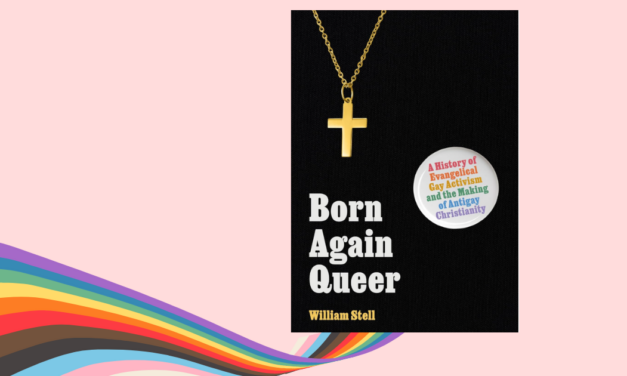
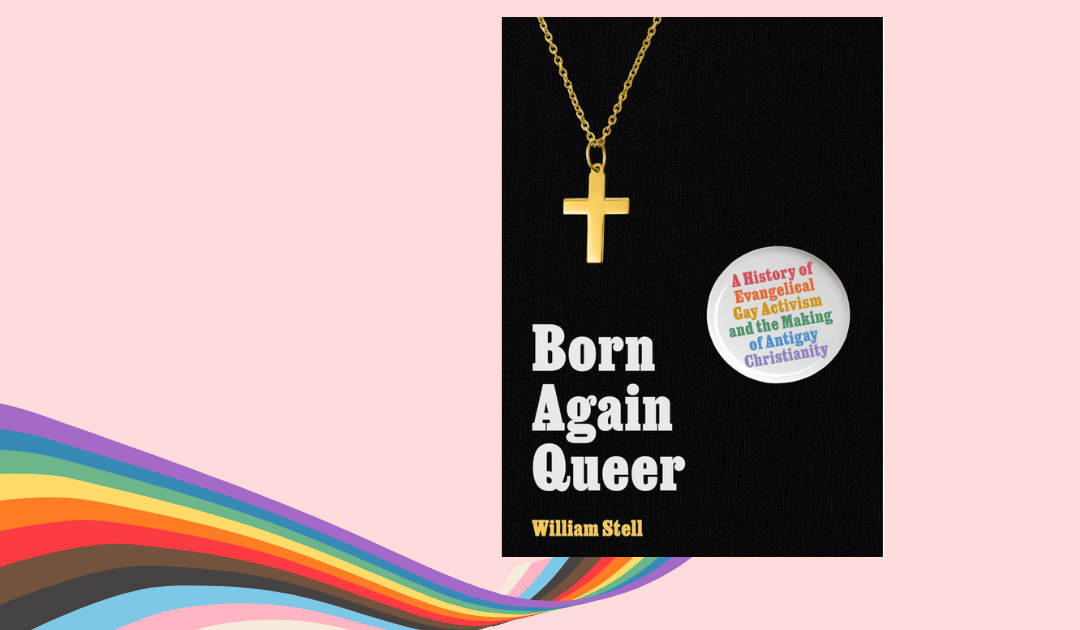
Born Again Queer: A History of Evangelical Gay Activism and the Making of Antigay Christianity
Princeton University Press, 2026
Dr. William Stell of Princeton University has a scintillating story to tell. Once, several decades ago, it seemed almost certain that four gay and lesbian evangelicals — Troy Perry, founder of the Metropolitan Community Churches; Ralph Blair, founder of Evangelicals Concerned; and Letha Scanzoni and Virginia Mollenkott, co-authors of Is the Homosexual My Neighbor? (HarperSanFrancisco, 1978) — had the chance to alter the course of history. These four were determined to make the so-called “affirming” view of sexuality acceptable within mainstream evangelicalism. Stell, in Born Again Queer: A History of Evangelical Activism and the Making of Antigay Christianity (Princeton University Press, 2026), painstakingly documents their efforts and the response of evangelicals within the centers of power at that time, mainly Christianity Today, Fuller Theological Seminary, Moody Bible Institute, Bob Jones University, and a variety of other institutions.
Stell contends that Perry, Blair, Scanzoni, and Mollenkott were undermined by their commitment to the authority of Scripture, on the basis of which they attempted to make the case for the blessedness of homosexuality. He rejects what he calls “hermeneutical determinism,” which is the idea that belief in biblical authority and inerrancy would lead to unity on questions of doctrine and praxis (pp. 10–12). Moreover, according to Stell, evangelicalism is a social construct. Perry, Blair, Scanzoni, and Mollenkott became victims of this construct in so far as they insisted the teachings of Scripture are “clear” on this issue. The “construction” of evangelicalism in this period, according to Stell’s theory, “involved the distortion and erasure of subjects who do not fit — like the evangelical gay activists in this history” (9).
Throughout, Stell allows himself to be astonished and angry that their efforts were largely rejected. They did not succeed in making evangelicals, nor evangelical institutions, accept the idea that the biblical view of sexuality included affirming and blessing same-sex sexual relationships. And yet I believe Stell’s historical work, however tedious a slog for the reader, illumines a decisive moment in Christian history.
Troy Perry. The first of the four evangelicals Stell profiles is the only one I had heard of. Troy Perry (b. 1940) founded the Metropolitan Community Church (MCC) in 1968 in Los Angeles in the living room of his pink house. The congregation was comprised of “eight friends, three strangers, and Perry’s mother” (69). Stell describes the scene: “He borrowed a black liturgical robe for the occasion, assuming that some attendees would expect a minister to wear one” (69). The title of the sermon was “Be True to You,” and he celebrated communion with a “glass candy dish that belonged to a neighbor” and a “silver Jefferson cup that belonged to his boss at Sears” (69).
Perry grew up in a Pentecostal church in Georgia (65). He was licensed as a Baptist preacher in his mid-teens (66), eventually attending a Bible college and marrying a minister’s daughter who bore him two children. Perry’s father died in his early childhood. Stell writes that Perry “endured his stepfather’s frequent physical abuse” and also that “soon after Perry’s thirteenth birthday…one of his stepfather’s friends sexually assaulted him” (65). His “earliest sexual experience with another boy at the age of nine,” however, “felt free of shame” (66). Stell contends that “Perry eventually learned to be troubled by his attraction to and intermittent exploration with other boys” (66). Part of that trouble was that a young man with whom he’d had a sexual liaison confessed it to the leadership of his church. Perry was confronted and told to “get out of town” (66).
Perry made his way to Los Angeles via Florida and started a church there. His life forever changed, however, when he
purchased an issue of the “homophile” magazine ONE and a copy of The Homosexual in America, a groundbreaking book by Edward Sagarin (under the pseudonym Donald Webster Cory) that presented gay people as a minority in need of society’s sympathy and protection. For Perry, these texts were revelatory: “A burden seemed to be lifted from my shoulders,” and “I knew without a shadow of a doubt that I was a homosexual.” (67)
Stell details the initial explosive growth of the Metropolitan Community Church and the influence it had on wider evangelicals. It was a curious institution in which, in the words of Ronald Enroth, “most [MCC ministers] have retained their evangelical mindset and orthodox theology except where that traditional theology conflicts with their views on homosexual behavior” (70–71, brackets in original).
Ralph Blair. Ralph Blair (b. 1939), the second activist Stell profiles in Born Again Queer, was the most theologically conservative of the four, and the most pugilistic. Stell describes him as “rigid” (143). Whereas Perry was primarily a pastor, Blair was an intellectual and thinker. He attended Bob Jones University (BJU) and Westminster Theological Seminary, worked with InterVarsity, and earned a doctorate in psychology from Penn State (101–105). As a young and perhaps naïve student, however, he ran afoul of the moral dictates of BJU for passing out a book called Sex Without Fear (1950). Stell does not believe Blair’s reason for putting the text in the hands of his classmates. He writes, “he took it upon himself to ensure that his hall mates would not be unprepared when the proper time came,” but Stell “imagine[s]” that “he was also motivated by a desire to talk with other young men about sex” (101–102, brackets added).
Eventually, Blair strained his relationship with InterVarsity by speaking “openly about a belief that he had been slowly, carefully forming for years: a gay couple’s partnership, if it was long-term and monogamous, could be just as pleasing to God as a straight couple’s marriage” (103). Stell distills Blair’s rhetorical stance in this way: “We gay evangelicals are more true to the Gospel than those ex-gay evangelicals are” (114, emphasis in original). Blair believed that anyone who promoted so-called “conversion therapy” for those suffering from unwelcome sexual desire for members of the same sex was implicated in a sort of theological “fraud.” “Demands for sexual conversion,” Stell explains, “distorted the principles of sola fide and sola gratia by turning salvation into something that gay people must earn by becoming straight. Thus, in Blair’s words, churches that force gay people into ex-gay ministries ‘have abandoned their role of preaching the Gospel of grace’” (114). At the same time, Blair was against promiscuity of any kind and insisted that therapy, in those cases, could be beneficial. He felt so strongly about this that he founded something called the Homosexual Community Counseling Center, Inc. (105).
Blair is best known for Evangelicals Concerned, an organization that he hoped would “help people to integrate a gay-affirming view into their Christian faith” (106). Blair wrote prolifically on the subject and spoke wherever he could gain an invitation, eventually hosting an annual conference (107). He helped establish local chapters of Evangelicals Concerned, though there were never more than twenty (107). While Blair believed his approach was “more faithful to the Bible — and thus more faithful to the evangel and evangelicalism — than were the positions of his antigay opponents” (116, emphasis in original), Stell draws out the contradiction inherent in leaning so heavily on the Bible to make the case for homosexuality. He writes, “The scriptures were clear, Blair insisted, but they were also complicated.” In other words, “Blair wrestled with the very weapon he brandished” (116).
Virginia Mollenkott and Letha Scanzoni. According to Stell, who was given access to Virginia Mollenkott’s private papers, she and Letha Scanzoni decided to turn a single chapter Scanzoni had been writing into the book that became Is the Homosexual My Neighbor? towards the end of 1975. It was that summer that Mollenkott (1932–2020), on a weekend visit, told Scanzoni (1935–2024) that she was a lesbian. Scanzoni “had not knowingly met a lesbian or gay person before, and she had no suspicions about her new friend. With her own views on homosexuality still undetermined, and with the implications of Mollenkott’s disclosure for her own life and work still unknown, Scanzoni felt shocked. Her face turned pale” (154).
Like Perry, Mollenkott was abused as a child. She was beaten by her own mother (149). At age eleven, she was preyed upon by a twenty-one-year-old woman (149). Stell quotes Mollenkott herself: “Technically Madeline committed statutory rape….This went on for a while….She treated me like I knew something and like I was something. And no one had ever treated me that way before….What child could say no to the first person that ever was loving to them?” (150). Mollenkott attended Bob Jones, going on to earn a doctorate from New York University (150). She also married and had a child. Ultimately, though, she acquired a teaching position secure enough that she felt free to get a divorce. She finally “accepted her queer identity” by encountering books like Troy Perry’s 1972 The Lord Is My Shepherd and He Knows I’m Gay (151).
Stell believes Mollenkott and Scanzoni did not succeed as they might have because they were so committed to “an evangelical logic that treats the Bible as a single, coherent, and perspicuous source, divinely endowed with supreme and sweeping authority.” They “deployed a characteristically evangelical tactic by invoking the ‘clear’ teachings of the Bible in favor of their position” (164). Initially, it seemed they would be successful. In particular, the editor of the magazine The Other Side was convinced by their rhetoric and therefore “committed to advocating for gay affirmation” in that publication (171).
Elisabeth Elliot. Stell alleges in Born Again Queer that Virginia Mollenkott had a sexual relationship with prominent evangelical missionary and author Elisabeth Elliot (1926–2015) in the mid-1970s. According to Mollenkott, Elliot was intending to out Mollenkott’s sexuality at a large evangelical conference — the 1975 Evangelical Women’s Caucus. Stell writes that Mollenkott, in a private hotel room with no witnesses, confronted Elliot: “If you keep it up, I’m gonna say to people, ‘Ask her how she knows.’” Then, according to Mollenkott, Elliot “fell down on her knees in front of me and said, ‘You could destroy me, Virginia.’” Mollenkott replied, “Yes, I could, Elisabeth. Except that I’m not that kind of person.” That, Mollenkott concluded, was “how we ended that [pause] aspect of our friendship” (151; brackets in original).
Stell, in an endnote, explains that he received this information from Mollenkott in an interview on May 1, 2020. “To my knowledge,” he writes, “this is the only written account of this event.” According to Mollenkott, Elliot was “also very close to another woman, that I know of. And then she got married for the second time, and finally the third time….Oh boy, what I’ve seen” (298n10).
Those with knowledge of Elliot’s extensive oeuvre will be surprised to encounter this allegation. Nothing in her published journals, articles, or books corroborates these accusations; the relevant published evidence establishes only that she attended the conference mentioned above.1 Stell alleges in an article that, based on the following paragraph from a letter Elliot wrote to her mother in 1964, Elliot may not only have been affirming, but might herself been attracted to women:
The problem is far more complex than a simple matter of sin….Sin only enters when the law of love is transgressed if I understand Jesus’ interpretation of the law. David and Jonathan clearly had a much deeper love than the usual man-to-man friendship. They met in secret, they kissed one another, and they frankly said it passed the love of women. I’m not building a doctrine on this — I only want to face up honestly to what we are told in Scripture, not ignoring or explaining away any facet of it. Perhaps the truth is that there are no such things as lines drawn, coincident with sex. Love is the great thing.2
The tenor of this paragraph is at odds with Elliot’s published writings; she consistently taught the historic orthodox Christian position that sexual relations belong within marriage between a man and a woman and that same-sex sexual activity is prohibited.3 Moreover, there is no indication in that paragraph that she herself experienced same-sex attraction. Christian Research Journal staff reached out to the Elisabeth Elliot Foundation. The foundation responded privately but chose not to issue a public statement.
In a circumstance in which the accusation is based solely on a retrospective account of a private event for which there were no witnesses, I am not in the least inclined to take the word of two embittered anti-evangelical writers who cannot faithfully represent the biblical gospel over the one who could. This is not, of course, a foolproof test. Elisabeth Elliot is no longer with us and able to defend herself. Nevertheless, I am highly suspicious of Stell’s decision to include an allegation resting on the testimony of a woman who, by Stell’s own fawning estimation, had grown resentful. Shortly before her death, Stell reports that Mollenkott felt like she “just didn’t exist to the evangelical world” (272). For example, she was frustrated that Matthew Vines did not bother to mention her in God and the Gay Christian (274–75).4
Stell shapes the book’s narrative around the fact that he made bold to send some portions of his project to Mollenkott, hoping, it seems, to make an emotional connection of solidarity. At her funeral, her partner returned the work to Stell. On the last page of his now well-marked draft, Mollenkott had scrawled, “Amen” (17). Thus, Mollenkott granted him the affirmation she so greatly desired. Mollenkott died in 2022. Without the speculative and sensational episode of Elisabeth Elliot — indeed, with it — the book is almost unreadable.
Historical Evangelicalism. Stell’s stated task is to demythologize evangelicalism. There are only two kinds of people in the book — gay and “anti-gay.” In the vein of Kristin Kobes Du Mez’s Jesus and John Wayne (Liveright, 2020), he rejects the “belief-based models that have long dominated the study of evangelicalism.” He believes they “covertly serve a theological agenda, obscure change over time, flatten internal diversity, and fail to account adequately for a host of historical developments, including the emergence and later erasure of evangelical gay activism” (108). The category of identity and historical classification “evangelical” is not a “stable, uniform theological construction” but rather a “dynamic, perennially contested discursive construction” (109). The book is, therefore, an attempt to show that “evangelicalism’s antigay majority” was “vulnerable” (5).
Readers of Born Again Queer, straight away, might have their eyebrows rise involuntarily. Aren’t there basically two thousand years of Christian history with no “gay activism”? Stell acknowledges that there was “antigay sentiment within evangelicalism before the rise of evangelical gay activism,” but he blames it on the “history of evangelical patriarchy” (9). Nevertheless, he believes that “evangelicals were not always so fixated on homosexuality” and “not always insistent that disagreement over these issues demanded schism” (9). Not very many people would have said it was “a false religion that is opposed to biblical revelation” (9). That opinion was created, “just like other instances of religious change” (9). Stell appeals to Michel Foucault who famously referred to “an unstable assemblage of faults, fissures, and heterogeneous layers that threaten the fragile interior from within” (10), though Foucault, of course, was not talking about evangelicals in the 1970s.
Where We Are Now. It is impossible to escape the irony of Stell’s effort in Born Again Queer, both his slog through that period of history and his aggrieved tone. The irony lies in the plain fact that millions of Americans, many of them self-identifying evangelicals, came to accept the affirming view of sexuality. Throughout the book, I felt continually surprised that Stell’s authorial voice was that of a person profoundly vexed. His conclusion that “vulnerable LGBTQ people have been robbed of the assurance that knowledge of predecessors can provide” (275) seemed to me unnecessarily despondent for a culturally ascendant victor. If there is any current peril for those identifying with the acronym, it is the spiritual darkness wrought by victory in the public square. Faithful believing Christians today are so beleaguered and unsure of themselves that they rarely whisper the truth aloud — that the Lord does not bless sin, and neither can the Church.
Even so, I think orthodox Christians should be encouraged by the story Stell constructs. Reading between the vignettes, the footnotes, the letters back and forth, it seems that these four people galvanized evangelicals in that period to become clearer and more careful about their exegesis and theology. It is not so much that the Bible has ever been unclear, as Stell likes to insinuate. Rather, it is that the universal consensus of the historic Christian tradition — first, that same-sex sexual conduct is wrong, and second, that whenever Scripture addresses such conduct, it condemns it — needed to be articulated plainly (see Leviticus 18:22, 20:13; Romans 1:26–27; 1 Corinthians 6:9–11; 1 Timothy 1:10; cf. Genesis 19:1–11; 2 Peter 2:6–10; Jude 7; see also Genesis 1:27; 2:18–24; Matthew 19:4–6).5 As the biblical worldview and historic consensus ceased to shape the broader culture, Christians had to gather their theological wits and begin to engage a culture that no longer understood them. The gracious consequence of figures like Ralph Blair and Virginia Mollenkott is the robust scholarship of theologians and scholars like Professor Robert Gagnon and Professor Tom Wright.6 There is no excuse for Christians today to encounter the claims made in Born Again Queer about the Bible and history and not be able to give a plausible and well-studied answer.7 Stell, in fact, banks on the reader having missed out on the last fifty years of church history.
Christians must increasingly come to grips with how futile the hope of the gospel sounds to a world dead in trespasses and sins. It is hardly a convincing answer to say to someone, in effect, I believe what the Bible says because I have the help of the Holy Spirit who dwells in me and illumines the text for me. That answer will not persuade someone who believes the text to be injurious to himself and his ideology. The only way the Bible really makes sense is through the conversion of being “born again” by water and the Spirit (John 3:3–8 ESV). That new birth very often takes the darkest and most closed heart unawares, usually when, against the reason and inclination of the sinner himself, he lets down his guard, opens the text, and reads what it says for himself. If Dr. Stell really wanted to be historically and intellectually honest about what evangelicals believe about sexuality and the Bible, he ought to give it a try.
Anne Kennedy, MDiv, is the author of Nailed It: 365 Readings for Angry or Worn-Out People, rev. ed. (Square Halo Books, 2020). She blogs about current events and theological trends on her Substack, Demotivations with Anne.
NOTES
- See Elisabeth Elliot, “Femininity,” in Love Has a Price Tag (Revell, 2026), 36; originally published as “Feminism or Femininity?,” Cambridge Fish 5 (Winter 1975–76): 2, 6.
- 2 quoted in William Stell, “A Rickety Closet: Evangelical Legend Elisabeth Elliot May Have Had a Gay Relationship. And That Matters,” Religion, Politics, Et Cetera, July 28, 2026, https://arcmag.org/a-rickety-closet/. One of Elliot’s biographers, Lucy S. R. Austen, explains the occasion of the letter: “Someone whom Katharine [Elisabeth’s mother] cared about very much appears to have been living with same-sex attraction, and mother and daughter discussed the situation by letter over a period of several months.” In this particular letter, Elliot “encouraged Katharine to accept the individual and trust God, trying to help her see that to experience attraction was not outside obedience to God.” Austen goes on to quote from an earlier portion of the same letter, culminating in the line, “Sin only enters when the law of love is transgressed, if I understand Jesus’ interpretation of the law.” Lucy S. R. Austen, Elisabeth Elliot: A Life (Crossway, 2023), 391; Austen dates the letter to March 10, 1964.
- See, e.g., Elisabeth Elliot, Discipline: The Glad Surrender (Revell, 1982), chap. 7, “The Discipline of the Body”; Passion and Purity: Learning to Bring Your Love Life Under Christ’s Control (Revell, 1984); Let Me Be a Woman: Notes to My Daughter on the Meaning of Womanhood (Tyndale House, 1976); “Not About Women Only: An Interview with Elisabeth Elliot,” Christianity Today, October 6, 1978, https://www.christianitytoday.com/1978/10/not-about-women-only-interview-with-elisabeth-elliot/; and Elliot’s endorsement of Richard F. Lovelace, Homosexuality: How Should Christians Respond? (Revell, 1984), in which she commends his defense of the historic Christian sexual ethic for its “humble loyalty to the written Word of God.”
- Matthew Vines, God and the Gay Christian: The Biblical Case in Support of Same-Sex Relationships (Convergent Books, 2014). For critiques of Vines’s revisionist position, see Sean McDowell, “Responding to Pro-Gay Revisionist Talking Points,” Christian Research Journal 38, no. 05 (2015), https://www.equip.org/articles/responding-pro-gay-revisionist-talking-points/; Joe Dallas, “Hath God Said? Assessing the Church’s ‘Change of Heart’ About Homosexuality,” Christian Research Journal 38, no. 04 (2015), https://www.equip.org/articles/hath-god-said-assessing-churchs-change-heart-homosexuality/.
- Historian of Christianity David W. Kling observes that “Throughout nearly all of Christian history, theologians, biblical commentators, and Christian society at large condemned homosexual activity as sinful. Not until the mid-twentieth century and then accelerating during the 1960s sexual revolution, was this blanket condemnation questioned.” “‘Men Committed Shameless Acts with Men’: The Homosexual Debate in Our Time,” The Bible in History: How the Texts Have Shaped the Times, 2nd ed. (Oxford University Press, 2023; online ed., December 15, 2022), https://doi.org/10.1093/oso/9780197525364.003.0011.
- See, e.g., Robert A. J. Gagnon, The Bible and Homosexual Practice: Texts and Hermeneutics (Abingdon Press, 2001); N. T. Wright, “The Letter to the Romans: Introduction, Commentary, and Reflections,” in The New Interpreter’s Bible, vol. 10, ed. Leander E. Keck (Abingdon Press, 2002), 435; “Communion and Koinonia: Pauline Reflections on Tolerance and Boundaries,” in Pauline Perspectives: Essays on Paul, 1978–2013 (Fortress Press, 2013), 255–70, esp. 265–67; see also Wright’s popular-level discussion, “Sex, LGBTQ+, Pre-Marital Relationships and Identity,” Ask N. T. Wright Anything, Premier Unbelievable?, August 4, 2024, YouTube, video 26:36, https://youtu.be/l62zv8nrMCQ. One could also add the excellent treatment of homosexuality in Richard B. Hays, The Moral Vision of the New Testament: Community, Cross, New Creation: A Contemporary Introduction to New Testament Ethics (HarperSanFrancisco, 1996), 379–406, even though, tragically, Hays later changed his convictions. See Anne Kennedy, “Richard Hays Changes His Mind About Sexuality and God: A Review of The Widening of God’s Mercy: Sexuality Within the Biblical Story,” Christian Research Journal 47, no. 03 (2024), https://www.equip.org/articles/richard-hays-changes-his-mind-about-sexuality-and-god-a-review-of-the-wideness-of-gods-mercy-sexuality-within-the-biblical-story/.
- For defenses of biblical sexuality against revisionist arguments for same-sex relationships, see, e.g., the following articles published in the Christian Research Journal: Joseph P. Gudel, “‘That Which Is Unnatural’: Homosexuality in Society, the Church, and Scripture,” Christian Research Journal 15, no. 3 (Winter 1993): 8–15, https://www.equip.org/articles/the-bible-and-homosexuality/; Sean McDowell, “Responding to Pro-Gay Revisionist Talking Points,” Christian Research Journal 38, no. 05 (2015), https://www.equip.org/articles/responding-pro-gay-revisionist-talking-points/; Sean McDowell, “Does the Levitical Prohibition of Homosexuality Still Apply Today?,” Christian Research Journal 38, no. 02 (2015), https://www.equip.org/articles/levitical-prohibition-homosexuality-still-apply-today/; Joe Dallas, “Answering the ‘Gay Christian’ Position,” Christian Research Journal 23, no. 1 (2000), https://www.equip.org/articles/answering-the-gay-christian-position/; C. Wayne Mayhall, “Is Arsenokoitai Really That Mysterious?,” Christian Research Journal 30, no. 06 (2007), https://www.equip.org/articles/is-arsenokoitai-really-that-mysterious-/. See also Matthew M. Kennedy, “Marriage Is About the Gospel: Clarifying the Boundaries of Christian Orthodoxy,” Christian Research Journal 45, nos. 02/03 (2022), https://www.equip.org/articles/marriage-is-about-the-gospel-clarifying-the-boundaries-of-christian-orthodoxy/; Matthew M. Kennedy, “Why Do Parents of Gay Children Change Their Theological Minds,” Christian Research Journal 43, no. 03 (2020), https://www.equip.org/articles/why-do-parents-of-gay-children-change-their-theological-minds/; John Whiteford, “Moral Heresy: Is There Such a Thing?” Christian Research Journal 43, no. 03 (2020), https://www.equip.org/articles/moral-heresy-is-there-such-a-thing/.