Cultural Apologetics Column
This article was published exclusively online in the Christian Research Journal, Volume 49, number 04 (2026).
When you support the Journal, you join the team and help provide the resources at equip.org that minister to people worldwide. These resources include our ever-growing database of more than 2,500 articles and Bible Answers, as well as our free Postmodern Realities podcast.
Another way you can support our online articles is by leaving us a tip. A tip is just a small amount, like $3, $5, or $10, which is the cost of a latte, lunch out, or coffee drink. To leave a tip, click here.
[Editor’s Note: This review contains spoilers for Clayface.]
Clayface
Directed by James Watkins
Screenplay by Mike Flanagan and Hossein Amini
Story by Mike Flanagan
Produced by Matt Reeves, Lynn Harris, James Gunn, Peter Safran
Starring Tom Rhys Harries, Naomi Ackie, David Dencik, Max Minghella, and Eddie Marsan
(Warner Bros. Pictures, 2026)
Rated R for strong bloody violence, gore, language, some nudity, and brief drug use
Gotham City has never suffered from a shortage of monsters. Murderers, madmen, and grotesque figures of every imaginable description have stalked its streets for more than eighty years, often proving considerably more interesting than the costumed hero tasked with bringing them to justice. Yet few of Batman’s adversaries seem quite so naturally suited to the horror genre as Clayface, a villain for whom the distinction between the man and the monster is a horrifying physical reality.
For those unfamiliar with the character, Clayface has a rather complicated history. He first appeared in Detective Comics #40 in 1940, created by Bill Finger and Bob Kane. That original incarnation, Basil Karlo (an obvious onomastic allusion to horror legends Basil Rathbone and Boris Karloff), was a washed-up horror film actor who turned to murder after discovering that one of his former pictures was being remade without him.1 Adopting the identity of a monster he had once portrayed on screen, Karlo began killing those associated with the production. There was nothing supernatural about him. He was simply a jealous, embittered actor whose inability to distinguish between his professional identity and his personal worth had driven him to violence.
The character underwent a significant transformation in 1961, when Bill Finger and Sheldon Moldoff introduced Matt Hagen in Detective Comics #298.2 Hagen was a treasure hunter who discovered a mysterious substance capable of transforming his body into a malleable, claylike material. He could alter his appearance and impersonate other people, as well as reshape his limbs into virtually anything imaginable. Over subsequent decades, these extraordinary abilities would make Clayface one of Batman’s most physically formidable adversaries.
But perhaps the character’s most memorable incarnation arrived in Batman: The Animated Series (1992–1995), which combined elements of both predecessors. Here, Hagen was reimagined as an actor whose disfigurement threatened his career and whose desperate efforts to restore his appearance ultimately transformed him into a shapeshifting monster. It was a surprisingly effective reinterpretation, one that recognized the tragic possibilities lurking beneath the character’s otherwise outlandish premise.
Consider the irony — an actor depends upon his face to communicate emotion and earn his living. Hagen acquires the extraordinary ability to assume practically any appearance imaginable yet loses the ability to maintain his own. His greatest power thereby becomes a terrible kind of imprisonment. It is this version of Clayface that provides the foundation for director James Watkins’s film, which exchanges the familiar conventions of superhero cinema for something approaching horror. Drawing upon the specific traditions of body horror and the sympathetic monsters of classic Hollywood, Clayface (2026) invites us to consider what remains of the man after he has become a monster.
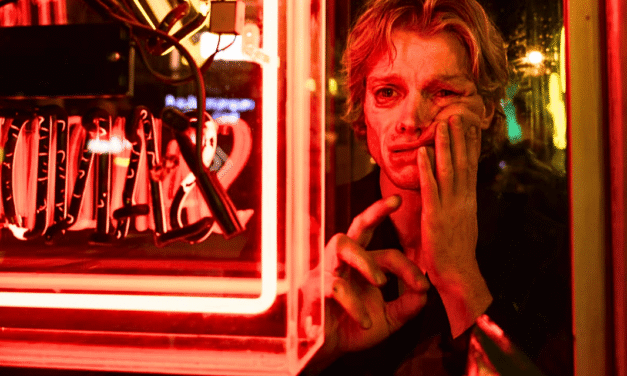
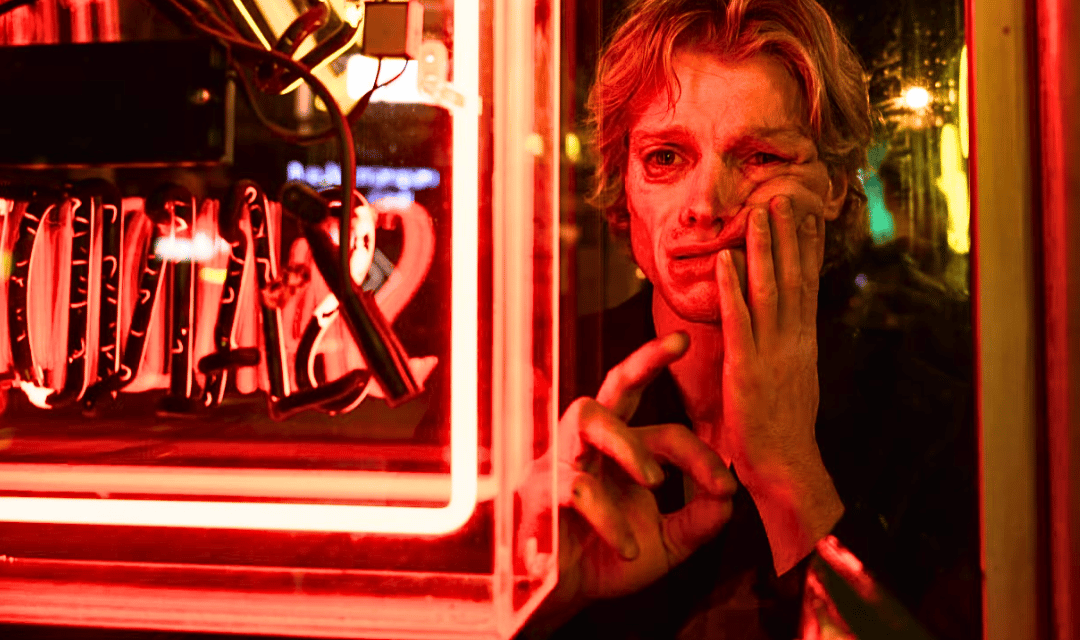
A Monster in the Making. Clayface follows Matt Hagen (Tom Rhys Harries), a struggling actor whose ambitions are shattered when a violent attack leaves him disfigured. For a man whose livelihood depends upon his appearance, the injury threatens considerably more than his career. Hagen has built his understanding of himself around his ability to perform and inhabit other identities — to be seen, essentially. The destruction of his face threatens to destroy the life he has constructed around it.
Desperate to recover what he has lost, Hagen pursues an experimental means of restoring his appearance through fringe scientist Dr. Caitlyn Corr (Naomi Ackie). What initially promises to be a miraculous recovery instead produces a terrific transformation. His body becomes unstable, capable of assuming different appearances but no longer reliably maintaining its own form. The very thing Hagen hoped would restore his humanity instead makes him physically unrecognizable.
Watkins approaches this material less as a conventional origin story than a psychological horror film. There are no elaborate schemes to conquer Gotham City and — perhaps conspicuously — no confrontations with Batman. The film instead remains concerned with the desperate circumstances of the psychological and moral unraveling of a man who is deteriorating physically. Harries gives Hagen a convincing mixture of vanity, vulnerability, and resentment. His suffering is genuine, and the film takes considerable pains to make us understand that. Yet his destructive behavior complicates that sympathy, even if the screenplay seems reluctant to hold him fully accountable for his decisions. The result is a film that owes considerably more to David Cronenberg’s The Fly (1986) than to the usual adventures of Gotham’s inhabitants.3
Sympathy for Monsters. Although Clayface emerges from the mythology of Batman, its closest cinematic relatives are considerably older than the modern superhero genre. Indeed, the film belongs to a tradition of tragic monsters that helped establish American horror cinema during the 1920s, 1930s, and 1940s. Long before Hollywood became preoccupied with sympathetic supervillains and morally ambiguous antiheroes, audiences were being asked to pity the very creatures they had come to fear.
Consider Lon Chaney’s portrayal of Erik in The Phantom of the Opera (1925). Hideously disfigured and condemned to a subterranean existence beneath the Paris Opera House, the Phantom is undoubtedly monstrous. His obsession with the young Christine Daaé (Mary Philbin) leads him to manipulation, kidnapping, and murder. Yet beneath his cruelty lies an unmistakable longing for affection and acceptance, and his tragedy is both that he has been rejected because of his appearance and his desperate desire to be loved has become inseparable from his willingness to possess and destroy.
James Whale’s Frankenstein (1931) develops this tragic sensibility even further. Boris Karloff’s creature is among the most recognizable monsters in cinematic history, yet his appeal rests upon something more substantial than his appearance. Brought into existence through the ambitions of another man, the creature enters the world with an almost childlike innocence. His encounters with humanity are characterized by fear, misunderstanding, and cruelty, culminating in violence that is simultaneously horrifying and pitiable. We recognize something human in the creature even as the people surrounding him refuse to do so.4
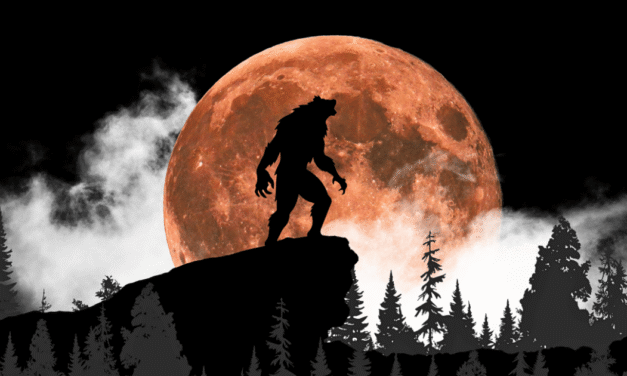
Perhaps the quintessential tragic monster of Universal’s classic horror cycle, however, is Larry Talbot, portrayed by Lon Chaney Jr. in The Wolf Man (1941). Unlike Dracula, whose predatory nature makes him a comparatively straightforward figure of terror, Talbot is a fundamentally decent man afflicted by a condition he neither desires nor fully understands. His transformation into a werewolf makes him dangerous to those he loves, and his growing awareness of that danger becomes the source of his anguish. The horror arises not just from his fated transformation, but from his inability to prevent it.5
These films demonstrate that tragedy requires something more than suffering. As Aristotle recognized in his Poetics, tragedy concerns the relationship between vulnerability and consequence, the terrible possibility of ruin. Its power lies in awakening pity and fear, allowing audiences to recognize both the misfortunes that befall others and the fragility of their own circumstances.6 This is particularly important for Clayface. Like the Phantom, Hagen’s physical appearance becomes inseparable from his longing for acceptance. Like Frankenstein’s creature, he discovers that society’s response to his body can be as cruel as the transformation itself. And like Larry Talbot, he becomes horrified by his inability to control what he is becoming.
But Hagen’s tragedy also depends upon his choices. His suffering may explain his resentment, but it cannot excuse everything he subsequently does. The most compelling monsters of classical Hollywood were not interesting merely because they were misunderstood; rather, they were interesting because audiences could recognize something of themselves in creatures capable of ghastly things.
The Grotesque. What makes Clayface interesting from a Christian perspective is its employment of the grotesque. The term is frequently used as a synonym for the ugly or the disgusting, but its artistic tradition is a bit more sophisticated and concerned with the disruption of familiar categories, particularly the boundaries separating the human from the inhuman, the beautiful from the repulsive, and the ordinary from the unnatural. The grotesque disturbs us because it makes something recognizable suddenly and profoundly unfamiliar.
The literary critic Wolfgang Kayser understood the grotesque in terms of an estranged world, one in which the familiar structures of reality become threatening and incomprehensible.7 This is what happens to Hagen. His body, the means through which he has experienced the world, becomes something alien. His own flesh is no longer entirely recognizable to him, and the very thing through which he has understood himself becomes unreliable.
Few Christian writers understood the possibilities of the grotesque better than Flannery O’Connor. A devout Catholic, her fiction is populated by peculiar and frequently unpleasant characters. She employed grotesque imagery to expose moral and spiritual realities that more conventional storytelling might leave comfortably undisturbed. In her essay, “The Fiction Writer and His Country” (1957), she observed that when addressing the spiritually insensitive, “to the hard of hearing you shout, and for the almost-blind you draw large and startling figures.”8 O’Connor recognized that the grotesque could accomplish something extraordinary. By confronting audiences with the strange, the disturbing, the physically repulsive, it could expose the moral deformities concealed beneath otherwise respectable appearances.
Here Clayface offers a particularly fruitful point of contact with Christian anthropology. Scripture locates the dignity of the human in humanity’s creation in the image of God, not in physical beauty or the capacity for self-expression. Genesis presents human beings as creatures formed from the dust of the ground, receiving their existence rather than manufacturing it. The incarnation and bodily resurrection further affirm the goodness and significance of embodied human life.
Hagen’s tragedy is that he has confused his appearance with his humanity. When his face is destroyed, he believes that he himself has been destroyed. Yet his disfigurement does not diminish his dignity, nor does his suffering absolve him of moral responsibility. His monstrosity ultimately emerges from the destructive choices he makes as a result of his shallow anthropology.
Contemporary culture seems remarkably interested in explaining evil through suffering and trauma, as well as social circumstances, sometimes to the point of confusing explanation with justification. Christianity offers a more comprehensive anthropology, one capable of acknowledging both the dignity of the sufferer and the culpability of the sinner.
Clayface is hardly a “great” film, but it is a well-made little horror picture that takes some welcome risks with its comic-book material. Its weakness is that it occasionally sacrifices Hagen’s moral development in its determination to make him sympathetic. Nevertheless, its grotesque imagery raises some obvious theological questions worth considering.
Cole Burgett is a graduate of Dallas Theological Seminary and the Moody Bible Institute. He currently serves as the Assistant Director of Online and Nontraditional Learning at Corban University, as well as an Assistant Professor of Theology. He writes extensively about theology and popular culture.
NOTES
- Bill Finger (writer) and Bob Kane (artist), “The Murders of Clayface,” Detective Comics #40 (June 1940), DC Comics. Karlo’s name is a deliberate homage to two prominent figures of classic horror cinema, Basil Rathbone and Boris Karloff. The character also owes something to Lon Chaney’s portrayal of the Phantom in The Phantom of the Opera (1925), particularly in his theatrical appearance and murderous resentment. Unlike later incarnations of Clayface, Karlo possessed no supernatural abilities, relying instead upon makeup, disguise, and knowledge of the film industry. His original appearance thus belongs more properly to the tradition of Gothic horror and the theatrical madman than to the superpowered villains who would eventually populate Batman’s rogues’ gallery.
- Bill Finger (writer), Sheldon Moldoff (pencils), and Charles Paris (inker), “The Challenge of Clay-Face,” Detective Comics #298 (December 1961), DC Comics. Hagen’s introduction reflects the considerable transformation of the American comic book industry during the intervening two decades. The 1940s had witnessed the enormous popularity of superheroes alongside crime, mystery, and horror comics, but by the early 1950s the industry faced mounting public criticism, particularly following psychiatrist Frederic Wertham’s Seduction of the Innocent (1954) and congressional hearings investigating the alleged relationship between comic books and juvenile delinquency. The industry’s response was the establishment of the Comics Code Authority in 1954 and stringent restrictions that effectively marginalized the horror and crime genres. Meanwhile, the emergence of the Silver Age of Comics, conventionally dated to DC’s revival of the Flash in 1956, brought renewed enthusiasm for superheroes and science fiction. Clayface’s reintroduction illustrates this shift. Where the original Basil Karlo had been a relatively conventional murderer drawn from the traditions of Gothic horror, Matt Hagen was a superpowered criminal whose abilities derived from a mysterious scientific phenomenon.
- Cronenberg’s The Fly (1986), a remake of the 1958 film of the same name, is widely regarded as a landmark of modern body horror, a subgenre concerned with the violation of the body. Starring Jeff Goldblum as scientist Seth Brundle, the film combines disturbing practical effects with a tragic narrative of bodily degeneration after Brundle’s experiment in teleportation inadvertently fuses his DNA with that of a housefly. The film earned an Academy Award for Best Makeup and remains one of the defining examples of the genre’s capacity to evoke pity as well as revulsion.
- Karloff’s portrayal represents a uniquely important development in the cinematic tradition of the sympathetic monster. Unlike Mary Shelley’s articulate and intellectually sophisticated creature, Whale’s monster is largely mute, communicating his bewilderment and longing through both gesture and physical expression. His initial innocence is especially apparent in his encounter with the young Maria, whose tragic death results from his inability to understand the consequences of his actions rather than any deliberate malice. The subsequent pursuit of the creature by an enraged mob further complicates the audience’s sympathies, transforming what might otherwise have been a conventional story of monstrous violence into a tragedy of abandonment and rejection. See also Rhidian Davis, “It’s Alive! The Gothic Tradition’s Enduring Legacy on Screen,” Sight and Sound (November 2013), British Film Institute, October 31, 2025, https://www.bfi.org.uk/sight-and-sound/features/its-alive-gothic-traditions-enduring-legacy-screen.
- George Waggner (director), The Wolf Man (Universal Pictures, 1941). The film’s preoccupation with fate is evident in screenwriter Curt Siodmak’s original title, Destiny. Having fled Nazi Germany, Siodmak drew upon his experience of persecution and displacement to construct a story in which an essentially decent man finds himself condemned by circumstances beyond his control. The film’s recurring verse, which warns that even the pure of heart may become wolves, suggests that neither moral innocence nor religious devotion can protect a person from an apparently predetermined fate. This fatalism culminates in the film’s conclusion, when Talbot is killed by his own father, Sir John (Claude Raines), who only afterward discovers the identity of the creature he has destroyed. The fortune teller Maleva’s final pronouncement that Talbot’s suffering has reached its predestined end lends to the conclusion the character of classical tragedy. Talbot’s destruction is neither punishment for deliberate wickedness nor the consequence of moral failure, but the fulfillment of a fate he has desperately struggled to escape. See Susan King, “‘Wolf Man’ Writer Reflected Wartime Jewish Experience,” Los Angeles Times, February 3, 2010, https://www.latimes.com/archives/la-xpm-2010-feb-03-la-et-classic-hollywood3-2010feb03-story.html. For an essay that traces the scattered mythology of the werewolf, see Cole Burgett, “A Man Among the Monsters: Werewolf Mythology and the Christian Imagination,” Christian Research Journal 49, no. 04 (2026), https://www.equip.org/articles/a-man-among-the-monsters-werewolf-mythology-and-the-christian-imagination/.
- Aristotle, Poetics 6 and 13. Aristotle identifies pity (eleos) and fear (phobos) as central to tragedy’s emotional effect. Pity arises from witnessing undeserved misfortune, while fear emerges from recognizing that such suffering might befall someone like ourselves. For Aristotle, the tragic protagonist’s downfall is neither the consequence of simple wickedness nor arbitrary suffering, but frequently involves hamartia, an error of failure or judgment through which a person passes from prosperity into misfortune. Of particular interest is the use of hamartia in the Septuagint and New Testament, where it commonly denotes “sin.” The related verb hamartanō can mean to miss a mark, err, or do wrong. Although Aristotle’s usage should not be confused with the theological meaning of sin in Scripture, the shared vocabulary is suggestive. The connection is especially interesting when considering tragedy as a literary exploration of fallibility and the consequence of one’s actions.
- Wolfgang Kayser, The Grotesque in Art and Literature, trans. Ulrich Weisstein (Indiana University Press, 1963); originally published as Das Groteske: Seine Gestaltung in Malerei und Dichtung (Oldenburg: Gerhard Stallig Verlag, 1957).
- Flannery O’Connor, “The Fiction Writer and His Country,” in Mystery and Manners: Occasional Prose, selected and edited by Sally and Robert Fitzgerald (Farrar, Straus and Giroux, 1969), 34. O’Connor argues that Christian writers possess a particular sensitivity to the grotesque because they recognize the spiritual and moral distortions that contemporary audiences have come to regard as ordinary.